
Electrical Hazard Identification in the Workplace: The 2026 Safety Checklist
Across Australia, regulatory bodies are increasing enforcement of safety standards, with fines for electrical breaches reaching hundreds of thousands of dollars for corporations. For any facility manager or business owner, these figures represent more than just a financial risk; they highlight the critical importance of maintaining a rigorous safety culture. Effective electrical hazard identification in the workplace begins with a combination of daily vigilance and a managed professional testing schedule. You likely already know that prioritising the safety of your team is a core responsibility, yet the complexity of modern Australian Standards can make the process feel overwhelming. It’s often difficult to stay on top of specific testing intervals while managing daily operations, especially with recent updates to national emergency lighting and electrical safety regulations.
This guide provides a structured 2026 safety checklist to help you identify hidden risks, assess equipment under the current AS/NZS 3760 standards, and manage compliance with absolute confidence. We will walk through a simple process for managing electrical safety that ensures you meet your legal obligations while keeping your staff safe and operations running smoothly. By the end of this article, you’ll have a practical roadmap to transform complex regulations into a manageable, stress-free routine that ensures your organisation remains protected and audit-ready.
Key Takeaways
- Understand your legal responsibilities as a PCBU and the importance of adopting a proactive approach to risk management under Australian health and safety laws.
- Learn how to distinguish between hostile and normal operating environments to accurately determine the required testing intervals for your specific equipment.
- Utilise a practical visual safety checklist to monitor the condition of portable appliances, power leads, and outlets between scheduled professional inspections.
- Discover how professional testing and tagging under AS/NZS 3760 supports electrical hazard identification in the workplace by detecting internal faults that visual checks cannot find.
- Transition to a managed compliance program with digital asset registers to simplify your documentation and ensure you are always prepared for a WorkSafe audit.
What is Electrical Hazard Identification in the Workplace?
Proactive electrical hazard identification in the workplace serves as the foundation of a safe operating environment. It involves more than just reacting to a broken switch or a flickering light; it’s a deliberate, systematic strategy to find and mitigate risks before they manifest as accidents. In Australia, the Person Conducting a Business or Undertaking (PCBU) carries a non-delegable legal obligation to manage these risks. Failing to do so can result in severe penalties under national workplace health and safety laws, but more importantly, it places staff at unnecessary risk. While staff training is helpful, visual checks often fail to identify the complex internal failures that professional testing catches. Integrating these findings into your broader compliance monitoring strategy ensures that safety is a continuous cycle rather than a one-off event. By identifying issues early, you can maintain a reliable site and ensure your compliance services are helping you stay ahead of potential faults.
The Three Main Types of Electrical Risks
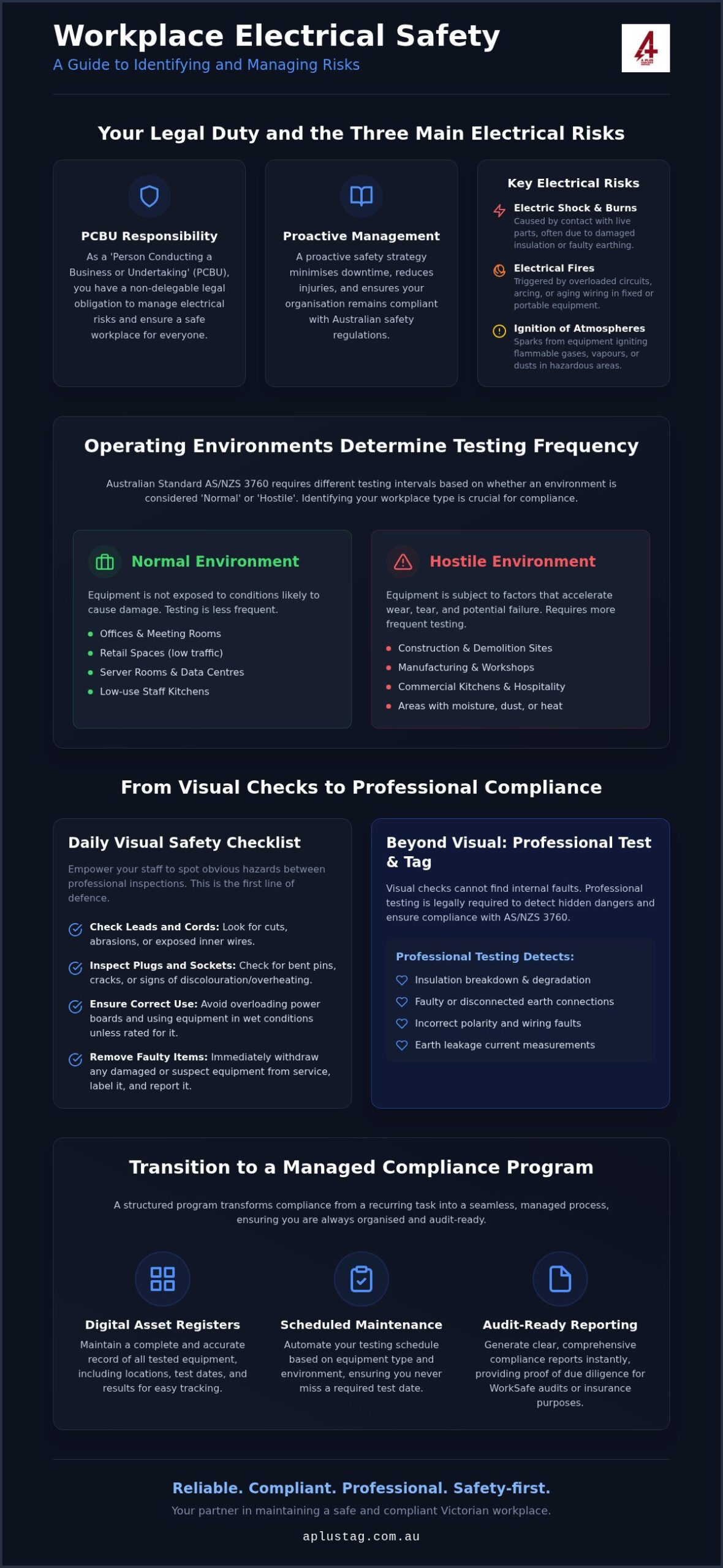
Electrical dangers generally fall into three categories that require different management strategies. First, electric shock and burns occur when individuals come into contact with live parts. This is frequently caused by damaged insulation or faulty earthing in portable appliances. Second, electrical faults are a leading cause of workplace fires. These are often triggered by overloaded circuits or arcing in aging wiring. Finally, in environments involving chemicals, gases, or dust, the ignition of flammable atmospheres is a major concern. This requires electrical equipment in hazardous areas to be specifically rated, installed, and maintained to prevent sparks from causing catastrophic explosions. Understanding these categories is the first step toward effective electrical hazard identification in the workplace.
Why Proactive Identification Matters
Choosing to be proactive rather than reactive offers tangible benefits for any Australian organisation. The most critical outcome is the reduction of workplace injuries and fatalities. This goal sits at the heart of every safety policy. Beyond the human cost, identifying hazards early is essential for minimising business downtime. A sudden equipment failure can halt production or close a facility for days, whereas scheduled testing allows for planned maintenance and repairs. Ultimately, a structured approach ensures your organisation remains compliant with national safety regulations. This provides peace of mind that you are meeting your legal duties while protecting your most valuable assets: your people and your property.
Identifying ‘Hostile’ vs. Normal Operating Environments
Understanding the specific environment where your equipment operates is essential for effective electrical hazard identification in the workplace. Australian Standard AS/NZS 3760 classifies workplaces based on the level of risk posed to electrical equipment. A hostile environment is one where the equipment is subjected to conditions that are likely to result in damage or a reduced expected life; this distinction is critical because it dictates how often your items must be tested and tagged to remain compliant. While a factory floor and a corporate office both require safety measures, the frequency and nature of their maintenance cycles differ significantly.
Characteristics of a Hostile Environment
Hostile settings are defined by factors that accelerate the wear and tear of electrical components. Common examples include commercial kitchens, where steam and heat are constant; construction sites, which involve heavy dust and physical impact; and manufacturing workshops. In these areas, leads are frequently moved, coiled, or exposed to corrosive substances. While international benchmarks like OSHA electrical safety standards provide a global perspective on risk recognition, local Australian regulations require specific testing intervals to manage these high-risk zones. If your equipment is regularly plugged and unplugged or used in damp conditions, it likely falls into this category. The mechanical damage caused by frequent movement is a primary reason for equipment failure in these sectors.
The Lower-Risk Commercial Office
A standard office is typically considered a normal operating environment. Equipment here is often stationary, such as desktop computers or printers, and is not subject to the same physical stress as a power tool on a building site. However, lower risk doesn’t mean no risk. Hazards in an office are often hidden from plain sight. Overloaded power boards and “daisy-chaining”, which is the practice of plugging one power board into another, are frequent issues that can lead to overheating and fire. Even in these settings, a regular electrical safety check is necessary to ensure that cables tucked away under desks haven’t been crushed by chair wheels or damaged by cleaning equipment.
Every workplace requires a unique approach to safety based on its specific operational demands. You can explore our full range of specialised compliance services to see how different environments are managed. If you’re unsure which category your facility falls into, it’s best to speak with a professional compliance partner to establish a tailored testing schedule that meets your legal obligations without causing unnecessary disruption to your team.
The Essential Workplace Electrical Safety Checklist
Practical electrical hazard identification in the workplace relies on a structured approach to visual auditing. While professional testing remains the gold standard for compliance, facility managers can significantly reduce risk by performing regular walk-through inspections. This proactive habit helps identify obvious physical damage before it leads to equipment failure or injury. When conducting these checks, focus your attention on portable appliances, power leads, and the surrounding environment. It’s also vital to ensure that any new equipment entering the site carries the Regulatory Compliance Mark (RCM), which confirms the item meets Australian safety requirements. Taking these small steps creates a safer culture and ensures your site remains prepared for scheduled professional inspections.
Visual Inspection Checklist for Portable Equipment
Begin your audit by examining the physical condition of every portable appliance. Frayed cords or exposed internal wires are immediate “stop-use” indicators that require the item to be withdrawn from service. Inspect the plugs for bent pins or any signs of discolouration, which often suggests overheating or internal arcing. Finally, confirm that every item has a current, legible test tag attached. If a tag is missing or the date has expired, the item must be re-tested to maintain compliance with AS/NZS 3760. These simple checks are the first line of defence in maintaining a safe, organised facility.
Environmental and Infrastructure Hazards
The area surrounding your electrical equipment is just as important as the devices themselves. Many common electrical hazards stem from poor cable management. For example, leads running across walkways create trip risks, while those tucked under carpets are prone to “crush damage” that can compromise insulation. You should also check for liquid spills near outlets or equipment and listen for unusual buzzing sounds or “arcing” from switchboards. If you notice any of these signs, it’s essential to document the hazard and contact a professional to assess the infrastructure before a fault occurs.
Emergency and Exit Lighting
Your safety checklist must extend to your building’s emergency systems. Confirm that all exit signs are illuminated and clearly visible from a distance, as these are critical during a power failure or evacuation. Check the light fittings for any physical damage or loose components that could hinder their performance. It’s important to remember that visual checks only confirm the lights are receiving power. To meet Australian emergency lighting standards, these units must undergo professional 6-monthly discharge testing to ensure the batteries can support the light for the required duration during an actual emergency. Integrating these checks into your routine ensures your facility remains compliant and your staff stay protected.
Beyond Visual Checks: Professional Testing and Tagging
While visual audits are an excellent first step, many electrical dangers remain invisible to the naked eye. Professional testing is the only reliable way to confirm that the internal components of an appliance are functioning safely. This deeper level of electrical hazard identification in the workplace is governed by AS/NZS 3760, which provides the technical benchmark for in-service safety inspections. By using specialised diagnostic equipment, technicians can identify insulation breakdowns or earthing failures that would otherwise go unnoticed until a dangerous fault occurs. This methodical approach transforms safety from a guessing game into a documented, verifiable process.
The Professional Test & Tag Process
A comprehensive professional test involves three critical electrical measurements that go far beyond a simple look-over. First, earth continuity testing confirms that the safety wire can effectively carry fault current back to the switchboard. Second, insulation resistance testing checks for internal leakage that could electrify the outer casing of a device. Finally, polarity testing ensures that active and neutral wires are correctly connected in all cords and extension leads. These steps provide a level of certainty that visual inspections simply cannot offer, ensuring your equipment is safe for continued use in any environment.
RCD Testing: Your Workplace Safety Switch
Residual Current Devices (RCDs) are your primary defence against electrocution. They work by monitoring the balance of electricity and disconnecting the circuit in milliseconds if a leak to earth is detected. While most units feature a manual “test” button for basic checks, professional RCD testing uses specialised instruments to measure the exact “trip-time” in milliseconds. This confirms the device operates within the strict limits defined by Australian Standards. Because requirements vary based on the workplace and equipment type, we always recommend obtaining site-specific professional guidance to ensure your safety switches remain fully functional.
Beyond standard tagging, thermal imaging provides a non-invasive way to inspect switchboards for hidden risks. By detecting heat signatures, technicians can identify loose connections or overloaded circuits before they ignite. This proactive approach significantly minimises the risk of workplace fires and helps you avoid the disruption of unplanned power outages. It’s an essential component of a modern, safety-first maintenance strategy that keeps your organisation organised and protected.
Establishing a Managed Compliance Program
Effective electrical hazard identification in the workplace shouldn’t be treated as a sporadic task that only happens when an audit is looming. Shifting from a reactive repair model to a structured, scheduled maintenance program is the most reliable way to protect your staff and your business. When you manage safety proactively, you aren’t just fixing broken equipment; you’re creating a system that detects wear and tear before it becomes a danger. A central part of this system is a digital asset register. This register provides a clear, documented history of every appliance on your site, making it easy to demonstrate your compliance to WorkSafe inspectors or insurance providers at a moment’s notice.
At A Plus Compliance Services, we understand that site managers have complex schedules to maintain. We manage your recurring testing cycles so you don’t have to keep track of every individual due date. To ensure your operations continue smoothly, testing can be arranged outside your normal business hours to minimise disruption. If an item fails a safety test, we follow a strict protocol: the item is immediately tagged as unsafe and removed from service. This clear, methodical approach ensures that faulty equipment is never accidentally used by staff, maintaining the integrity of your safety culture.
Benefits of a Professional Compliance Partner
Partnering with an experienced provider simplifies the complexities of Australian Standards. You’ll receive automated due-date reminders, ensuring that no testing interval is ever missed. This level of organisation is paired with comprehensive reporting that satisfies all regulatory requirements. Our expertise extends across a wide range of specialised compliance services, allowing you to manage multiple safety obligations through a single, dependable partner. Whether you require testing for standard office equipment or highly specialised biomedical devices, we provide the technical proficiency needed to keep your facility safe and organised.
Next Steps for Your Workplace
Transitioning to a managed program is a straightforward process that begins with a clear understanding of your current status. We recommend the following steps to establish a robust safety cycle:
- Review your existing testing records to identify any items that are currently out of date or missing tags.
- Organise a comprehensive site-wide assessment to determine the specific testing intervals required for your different environments.
- Establish a reliable compliance schedule that includes automatic reminders and digital documentation.
- Integrate electrical hazard identification in the workplace into your daily safety briefings to encourage staff vigilance.
By taking these steps, you move away from the stress of last-minute compliance checks and toward a state of organised control. It’s about more than just meeting a legal requirement; it’s about the peace of mind that comes from knowing your workplace is genuinely safe.
Strengthening Your Workplace Safety Culture
Maintaining a safe operating environment requires a balance between daily vigilance and professional expertise. By understanding the distinction between hostile and normal environments, you can ensure that your testing intervals are both compliant and practical. Effective electrical hazard identification in the workplace is not a one-off event but a continuous cycle of visual checks and technical diagnostics. Professional testing under AS/NZS 3760 and 6-monthly RCD trip-time checks provide the data needed to protect your staff and satisfy regulatory requirements. Moving toward a managed compliance program with a digital asset register ensures you’re always prepared for an audit while minimising the disruption to your daily operations.
A Plus Compliance Services acts as a dependable partner, providing the professional reporting and asset registers needed to keep your business organised. We can schedule testing outside your normal hours to ensure your facility remains safe without impacting productivity. Taking these proactive steps today creates a more secure, reliable workplace for everyone.
Frequently Asked Questions
What are the most common electrical hazards in an office?
Common office hazards include overloaded power boards and the practice of daisy-chaining, where one board is plugged into another. Cables tucked away under desks are often crushed by chair wheels or damaged by cleaning equipment over time. While an office is a lower-risk environment, these hidden issues can lead to overheating and fire. Regular electrical hazard identification in the workplace ensures these minor faults are caught before they escalate into significant safety incidents.
How often should I perform electrical hazard identification?
The frequency of testing depends entirely on your specific environment and the type of equipment being used. Items in hostile settings, like construction sites or commercial kitchens, require more frequent checks than those in a standard office. According to AS/NZS 3760, intervals can range from 3 months to 5 years. It’s best to consult with a professional compliance partner to establish a tailored schedule that meets your legal obligations and risk-management procedures.
Who is qualified to carry out electrical testing in my workplace?
Electrical testing should be performed by a competent person who has the necessary knowledge, skills, and experience. This individual must understand the requirements of AS/NZS 3760 and be trained in using specialised diagnostic equipment. While some businesses attempt internal checks, partnering with a professional compliance service ensures that all tests are conducted accurately and that your digital asset register is maintained to a standard that satisfies WorkSafe and insurance requirements.
Do I need to test and tag new electrical equipment?
New electrical equipment doesn’t require a full diagnostic test before its first use, but it must be visually inspected for damage. You should also ensure the item carries the Regulatory Compliance Mark (RCM). Although a test isn’t mandatory immediately, the item still needs to be tagged with its first scheduled test date. This ensures the new appliance is integrated into your managed compliance program and isn’t overlooked during the next round of professional testing.
What should I do if I find a damaged electrical lead?
If you discover a damaged electrical lead, you must immediately remove the item from service to prevent accidental use. Clearly identify the appliance with a “Caution” or “Out of Service” tag and record the fault in your internal logs. You should then arrange for a professional repair or a permanent replacement. Never attempt to patch a damaged cord with electrical tape, as this doesn’t restore the insulation’s integrity or meet Australian safety standards.
Is a visual inspection enough to meet Australian safety standards?
A visual inspection is a vital part of the process, but it isn’t enough to meet the full requirements of Australian Standards. Many faults, such as earthing failures or internal insulation breakdown, are completely invisible. Professional electrical hazard identification in the workplace requires specialised tools to measure earth continuity and insulation resistance. Only through this combination of visual and technical testing can you confirm that an appliance is truly safe for continued use by your staff.
What is the difference between a circuit breaker and an RCD?
While they may look similar in a switchboard, circuit breakers and RCDs serve different purposes. A circuit breaker is designed to protect the building’s wiring and equipment from overloads or short circuits. An RCD, or safety switch, is specifically designed to protect people. It monitors the flow of electricity and disconnects the power in milliseconds if it detects a leak to earth, which is the primary cause of electric shock and electrocution.
How long do I need to keep my electrical testing records?
You should maintain your electrical testing records for the entire life of the equipment or at least until the item is tested again. Keeping a detailed digital asset register is the most effective way to manage this documentation. These records are essential for demonstrating your compliance during a WorkSafe audit or when reviewing your insurance policies. A professional compliance partner can help you manage these records automatically, ensuring your history is always accurate and accessible.
