Biomedical Devices: A Guide to Safety Testing and Clinical Compliance
Thinking your standard “test and tag” routine covers your clinical requirements is a risk that could compromise both patient safety and your next audit. In a busy healthcare environment, it’s easy to feel overwhelmed by the technical distinctions between general electrical safety and the specialised management of biomedical devices. You want to ensure every piece of equipment is reliable, yet the pressure of maintaining a complex asset register while preparing for rigorous clinical standards can feel like a constant burden.
We understand that compliance shouldn’t come at the cost of your daily operations. This guide provides a clear path through the requirements of AS/NZS 3551, helping you protect your patients and secure your facility’s reputation. You’ll learn how to establish a systematic maintenance schedule that works for your team, rather than against them. We will also outline the essential steps to ensure your documentation is transparent, organised, and ready for any inspection, giving you the confidence that comes from professional, methodical oversight.
Key Takeaways
- Distinguish between standard electrical safety checks and the specialised verification required for clinical equipment to ensure patient safety.
- Clarify the distinct requirements of AS/NZS 3551 for equipment management and AS/NZS 3003 for electrical installations in patient care areas.
- Discover how a comprehensive asset register for biomedical devices creates a transparent, audit-ready trail of compliance.
- Learn how a proactive maintenance schedule minimises clinical disruption and ensures long-term reliability for essential hardware.
- Identify how professional compliance support helps healthcare providers navigate complex regulations with minimal impact on daily patient care.
What are Biomedical Devices and Why is Compliance Critical?
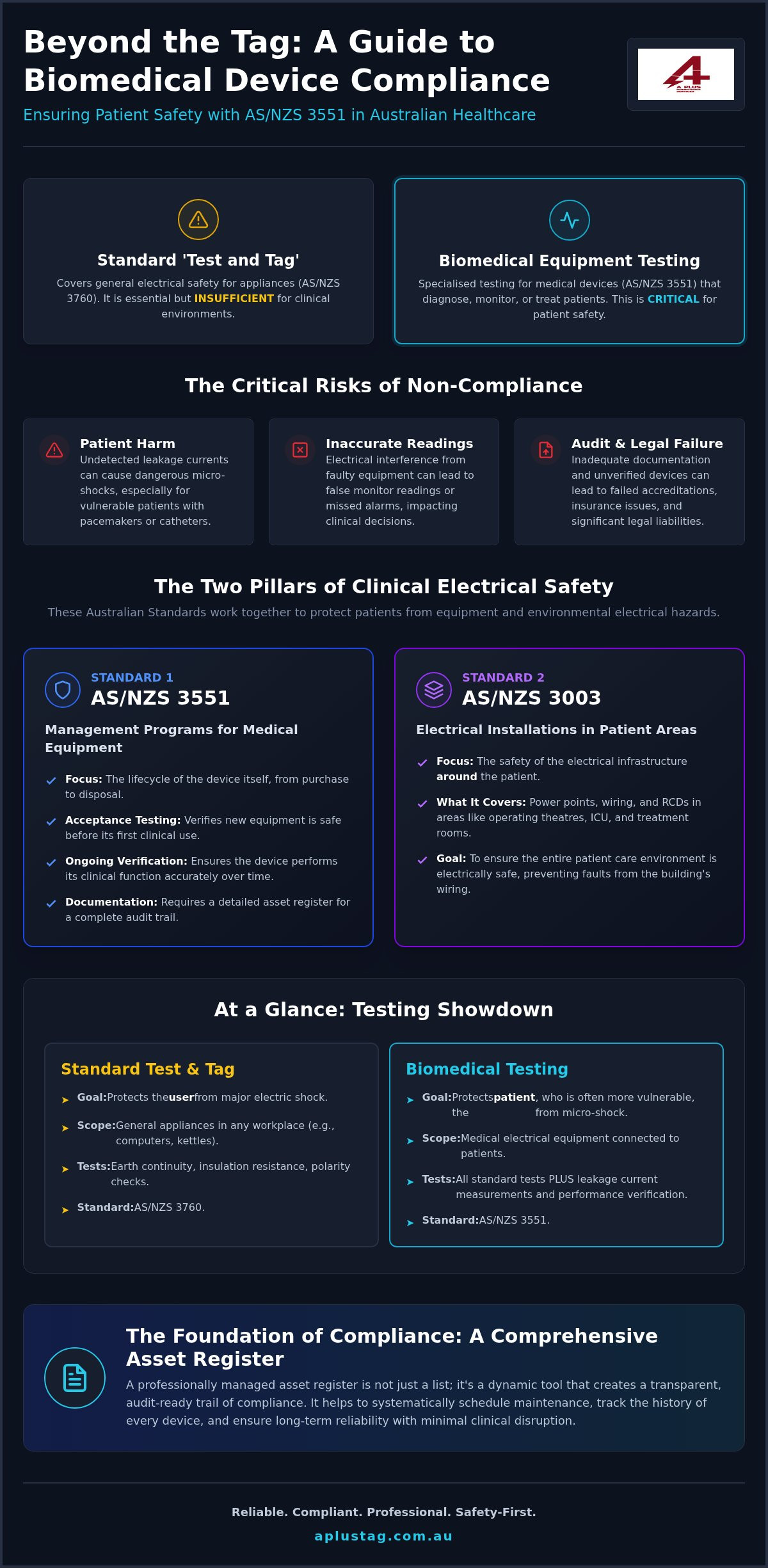
In an Australian clinical setting, the definition of What is a Medical Device? covers a broad spectrum of tools. For the purpose of safety testing, we focus specifically on biomedical devices that require an electrical power source to function. These are defined as medical electrical equipment used for patient diagnosis, monitoring, or direct treatment. While the Therapeutic Goods Administration (TGA) regulates the entry of these items into the Australian market, the responsibility for their ongoing safety and performance remains with the facility. The TGA ensures a product is fit for purpose at the point of sale, but your workplace maintenance program ensures it stays that way through years of heavy clinical use.
Healthcare providers carry a legal and ethical obligation to provide a safe environment. Using unverified or poorly maintained equipment isn’t just a technical oversight; it’s a risk to patient wellbeing that can have severe consequences. If a device hasn’t been tested to current Australian standards, you’re operating in a state of clinical uncertainty. This duty of care is non-delegable, meaning the clinic remains responsible for equipment safety even if they use external contractors.
The Clinical Importance of Equipment Verification
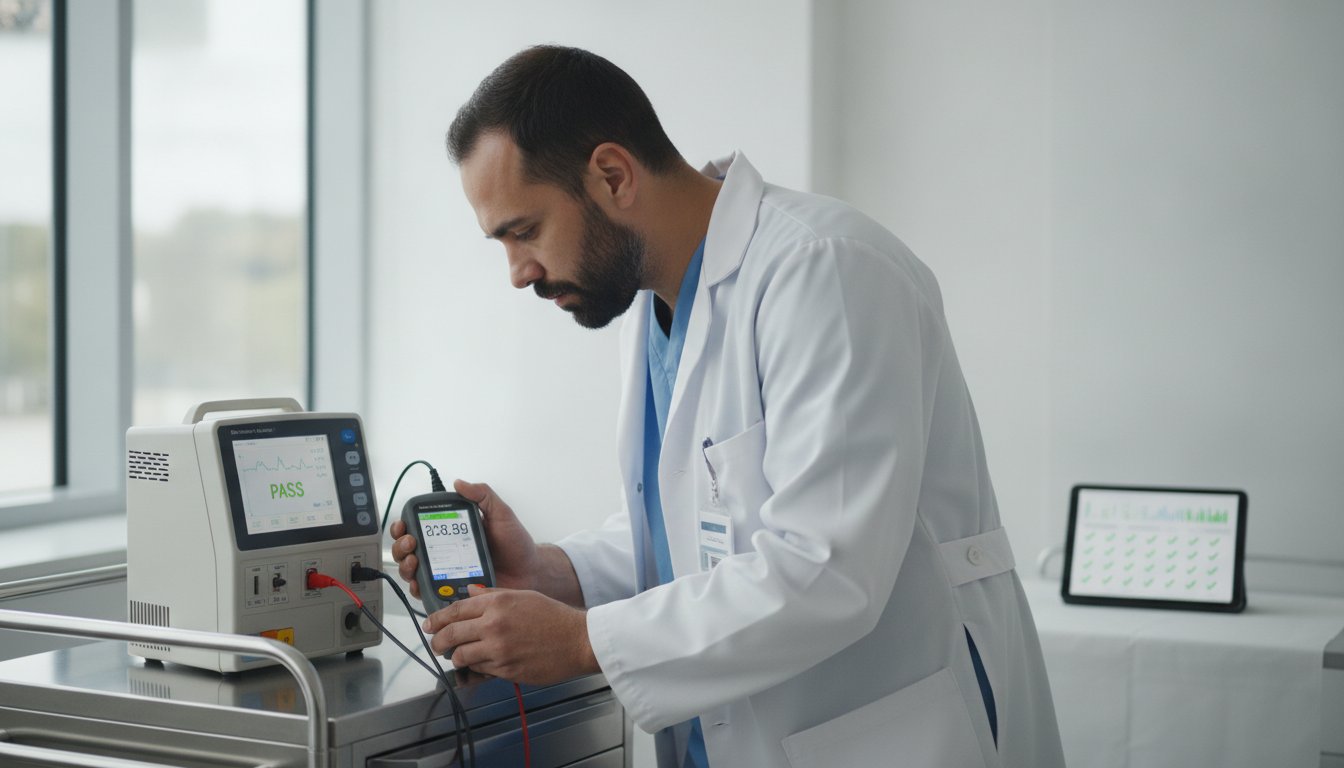
Regular testing is about more than just finding broken plugs. It’s designed to detect “leakage current,” which can cause micro-shocks. These are particularly dangerous for vulnerable patients with internal catheters or pacemakers. Beyond direct physical harm, unverified biomedical devices can cause electrical interference with sensitive monitors. This interference can lead to false readings or missed alarms, directly impacting patient outcomes. A “set and forget” approach is dangerous. Equipment failure doesn’t just halt a procedure; it erodes patient trust and can lead to significant legal liabilities for the facility.
Regulatory Framework for Australian Healthcare
The Australian regulatory landscape is a mix of state-based health regulations and national safety standards. To meet accreditation requirements, facilities must maintain a comprehensive audit trail that proves every device has been tested according to its risk profile. This documentation is vital for insurance purposes and clinical audits. According to current Australian safety guidelines, medical electrical equipment is defined as electrical equipment that has a patient connection part or transfers energy to or from the patient. You can explore our specialised compliance services to see how we help facilities manage these complex obligations.
Navigating Australian Standards: AS/NZS 3551 and AS/NZS 3003
Compliance in a clinical environment relies on two specific Australian standards that work in tandem to protect patients. While the Australian Regulatory Guidelines for Medical Devices provide the high-level framework for supply and registration, the day-to-day safety of biomedical devices on the floor is governed by AS/NZS 3551 and AS/NZS 3003. These standards aren’t just suggestions; they’re the benchmarks used by insurers and accreditation bodies to verify that your facility operates safely. Testing intervals for your equipment aren’t fixed. They’re determined by a methodical risk assessment that considers the equipment type, its clinical application, and the manufacturer’s recommendations.
AS/NZS 3551: Management of Medical Electrical Equipment
This standard focuses on the lifecycle of the device itself. It begins with “acceptance testing,” a critical process where new equipment is inspected and verified before its very first use on a patient. This ensures the hardware hasn’t been damaged during transit and meets all safety specifications. Ongoing performance verification then checks that the device still performs its intended clinical function accurately, while electrical safety testing looks for hidden faults like insulation breakdown or excessive leakage current. Every result must be documented in a centralised asset register. This transparency allows you to track the history of every device and stay ahead of your maintenance cycles. If you’re unsure if your current register meets these requirements, you can speak with our team for guidance on setting up a compliant system.
AS/NZS 3003: Patient Area Testing Requirements
The safety of biomedical devices is only half the equation. AS/NZS 3003 governs the electrical installations in “Patient Areas”, which is any location where a patient is intended to be examined or treated. The environment is classified based on the level of risk. Body-protected electrical areas are designed for routine procedures where patients are connected to equipment externally. Cardiac-protected electrical areas have much stricter requirements because they house patients undergoing procedures where the heart is directly accessible, making them extremely vulnerable to even tiny electrical currents. Testing the power supply, earthing, and RCDs in these rooms ensures that the infrastructure supporting your medical gear is just as safe as the devices themselves. You can find more details on how we manage these specific room tests in our biomedical service overview.
Biomedical Testing vs. Standard Test and Tag
A common mistake in clinical management is assuming that a standard “Test and Tag” service satisfies the safety requirements for biomedical devices. While AS/NZS 3760 is the go-to for office kettles and computers, it doesn’t meet the stringent safety criteria set out by Australian medical device regulations. General electrical testing is designed to prevent fires and basic shocks in a standard workplace. Clinical testing, however, addresses the unique physiological risks present when equipment is directly connected to a patient. Using a generalist electrician for these tasks often results in a false sense of security, as they lack the specialised tools to measure the minute electrical currents that can harm a vulnerable person.
Why Standard Tagging Falls Short in Clinics
AS/NZS 3760 focuses on simple insulation and earthing tests. In contrast, AS/NZS 3551 requires sophisticated measurements of earth leakage and patient leakage currents. These are measured in microamps because even a tiny current can be fatal if it reaches the heart directly. Devices like ECG monitors, defibrillators, and infusion pumps must be tested under this higher biomedical standard. Beyond electrical safety, compliance involves functional testing. We don’t just check if the device is safe to touch; we verify that it’s doing its job correctly. A defibrillator that powers on but fails to deliver the correct charge is a liability that standard tagging simply won’t catch.
The Value of Specialised Expertise
Generalist electricians often lack the training to identify faults specific to medical-grade hardware. Our technicians understand the nuances of medical-grade power supplies and the delicate nature of patient leads. A generalist might pass a lead that looks intact, whereas a specialist looks for degradation in the shielding that causes signal noise on a monitor. Hiring a generalist for sensitive biomedical devices introduces a layer of risk that can lead to equipment failure during a critical procedure. You can explore our specialised electrical safety services to see how we provide the high-level verification your facility requires. We act as your proactive partner, identifying potential issues before they become clinical emergencies. This methodical approach ensures your equipment stays in service and your facility remains fully compliant with Australian standards.
Organising a Maintenance Schedule and Asset Register
Managing a fleet of biomedical devices requires more than just technical skill; it demands a systematic approach to data management. A comprehensive asset register acts as the central nervous system for your facility’s safety programme. Without it, tracking which items are due for testing becomes a reactive, stressful task that often leads to missed deadlines and non-compliance. By categorising equipment based on risk and usage frequency, you can establish a predictable cycle that satisfies both clinical requirements and operational needs. High-risk items, such as those used in cardiac-protected areas, naturally require more frequent oversight than lower-risk diagnostic tools. This structured approach is also your primary defence in demonstrating due diligence to regulators. A robust approach to compliance monitoring for Australian workplace safety transforms this process from a reactive chore into a streamlined, professional routine.
Creating an Effective Asset Register
A functional register must go beyond a simple inventory list. It should include precise details such as serial numbers, specific locations within the clinic, historical test dates, and detailed pass/fail results. Moving from paper-based logs to digital compliance reporting is a significant step toward long-term transparency. Digital systems allow for automated due-date reminders, ensuring you’re never caught off guard by an upcoming audit. To understand how this works in practice, our electrical asset register case study demonstrates how a structured, centralised record streamlines safety obligations and keeps facilities audit-ready at all times. This level of organisation simplifies the clinical accreditation process immensely. Instead of searching through folders, you can provide auditors with clear, timestamped evidence of your facility’s safety history at a moment’s notice.
Minimising Disruption During Testing
We recognise that clinical environments never truly stop. Scheduling safety checks for biomedical devices shouldn’t compromise patient care or theatre schedules. An effective maintenance partner works around your peak times, often performing services outside normal operating hours to ensure minimal impact on your staff and patients. This flexibility allows your team to focus on clinical outcomes while we handle the technical background work. When a piece of equipment fails a test, the process must be immediate and clear. Faulty items are tagged and removed from service instantly, with the failure logged in the register to maintain an accurate history. This proactive management prevents the accidental use of unsafe hardware while allowing the rest of your facility to function without interruption.
Professional Compliance Support for Australian Facilities
Managing the safety requirements of biomedical devices shouldn’t be a source of stress for your clinical team. A Plus Compliance Services acts as a steady partner, taking the complexity out of your safety obligations through a methodical, transparent process. We prioritise clear communication, ensuring you always know the status of your equipment without having to decipher technical jargon. Our commitment to Australian Standards, specifically AS/NZS 3551 and AS/NZS 3003, ensures your facility remains a safe environment for both staff and patients. This proactive approach helps you avoid the rush of last-minute preparations before an audit, replacing chaos with a predictable, well-regulated cycle of maintenance.
A Partner in Clinical Safety
Facility managers often face the challenge of balancing strict safety protocols with the fluid nature of a healthcare environment. They trust a service that understands these clinical nuances, such as the need for non-disruptive testing and the high stakes of equipment failure. We provide professional, audit-ready documentation that stands up to the closest scrutiny. This level of preparation provides peace of mind, knowing that your compliance data is organised and accessible whenever it’s needed. It’s about building a long-term relationship based on punctuality and responsiveness. For a complete view of your facility’s electrical health, you might also find our guide on RCD testing for workplace safety a useful resource for maintaining broader site standards.
Next Steps for Your Compliance Program
Moving from a reactive, ad-hoc testing model to a structured program is the most effective way to manage long-term risk. We begin this transition with an initial site assessment, where we evaluate your current inventory and identify any immediate safety gaps. This assessment allows us to build a tailored compliance schedule specifically for your medical equipment and facility layout. By establishing a recurring cycle of verification, you eliminate the uncertainty that leads to non-compliance during audits. Our team works closely with you to ensure every piece of hardware is accounted for, tested, and correctly logged in your digital electrical asset register. We invite you to discuss how a customised plan can support your specific clinical goals. We are dedicated to providing a reliable, safety-first service that allows your facility to operate with complete confidence.
Securing Your Clinical Environment Through Precision Compliance
Maintaining biomedical devices requires a commitment to technical precision and systematic management. You’ve seen that standard safety checks aren’t enough for clinical settings where patient lives depend on equipment reliability. By implementing the rigorous standards of AS/NZS 3551 and AS/NZS 3003, you move from reactive maintenance to a state of organised control. This transition not only protects your patients but also safeguards your facility against the risks of non-compliance during clinical audits.
Our specialised safety testing ensures your medical electrical equipment meets every Australian requirement, while our comprehensive compliance reporting provides the audit-ready documentation your facility needs. We focus on providing a punctual, safety-first service that works around your theatre times and patient appointments. This methodical approach allows your team to focus on clinical excellence while we manage the technical safety details in the background. With a clear asset register and automated reminders, you’ll never have to worry about missing a compliance deadline again.
Let’s work together to build a reliable compliance framework that protects your patients and your professional reputation.
Frequently Asked Questions
What is the difference between AS/NZS 3760 and AS/NZS 3551?
AS/NZS 3760 covers general workplace electrical safety, whereas AS/NZS 3551 is the specialised standard for medical electrical equipment. While standard tagging checks for basic faults, the biomedical standard requires rigorous testing of leakage currents and functional performance. These extra steps are vital because clinical hardware often has direct physical contact with patients. This makes them more susceptible to causing internal electrical injuries that general testing won’t detect.
How often should biomedical devices be tested in an Australian clinic?
Testing intervals aren’t one-size-fits-all; they are determined by a combination of manufacturer recommendations and a formal risk assessment. Most clinical equipment requires testing every 6 to 12 months. Devices used in high-risk environments, such as cardiac-protected areas or for life-support, often require more frequent verification. Maintaining a structured schedule ensures you meet your safety obligations without allowing equipment to fall out of compliance between audits.
Do new biomedical devices need testing before they are used for the first time?
Every new piece of medical equipment must undergo acceptance testing before it is used on a patient. This process confirms the device hasn’t been damaged during shipping and performs exactly as the manufacturer intended. Performing this check allows you to enter the item into your asset register with a baseline safety record. It’s a critical step in maintaining a continuous safety history for all your biomedical devices.
What happens if a piece of medical equipment fails its safety test?
If a device fails, it must be instantly tagged as unsafe and removed from the patient area to prevent accidental use. You should record the failure in your asset register to maintain a transparent audit trail. The equipment then needs to be repaired by an authorised service agent or permanently decommissioned. Only once it has been repaired and successfully re-tested can it be returned to your clinical inventory.
Is Patient Area Testing (AS/NZS 3003) mandatory for all medical practices?
Compliance with AS/NZS 3003 is mandatory for all Australian healthcare facilities, including GP clinics, dental surgeries, and aged-care centres. This standard governs the electrical wiring and power supply in patient areas. It ensures that the room’s infrastructure is capable of supporting medical equipment safely. Without a certified patient area electrical safety testing outcome, even the most advanced medical devices cannot be used safely or legally in a clinical capacity.
Can biomedical testing be performed without shutting down the entire clinic?
You don’t need to shut down your clinic for safety testing to take place. We provide flexible service options, including working during lunch breaks or outside normal operating hours, to ensure your patient care remains the priority. Our technicians work methodically room-by-room, allowing your staff to continue their work in other parts of the facility. This organised approach minimises clinical downtime while still achieving total compliance.
What documentation do I need to provide for a clinical audit?
Auditors expect to see a detailed asset register that provides a clear history of every device in your facility. This documentation must include serial numbers, the date of every test, specific pass or fail results, and the name of the testing technician. Digital compliance reports are highly recommended as they allow for quick searching and provide an organised, professional overview of your facility’s safety status at a moment’s notice.
Who is qualified to perform biomedical equipment safety testing?
Testing must be carried out by a competent person who has received specific training in biomedical devices and the AS/NZS 3551 standard. This requires a deeper level of expertise than standard electrical work. A qualified biomedical technician uses specialised calibrated equipment to measure minute electrical currents and verify clinical functions. Using a generalist electrician who lacks this specific training can lead to missed faults and potential non-compliance during a clinical audit. A systematic approach to ongoing compliance monitoring across your Australian facility ensures that only appropriately qualified personnel are engaged for each category of equipment testing.
