How to Choose a Workplace Compliance Partner in Victoria: A 2026 Guide
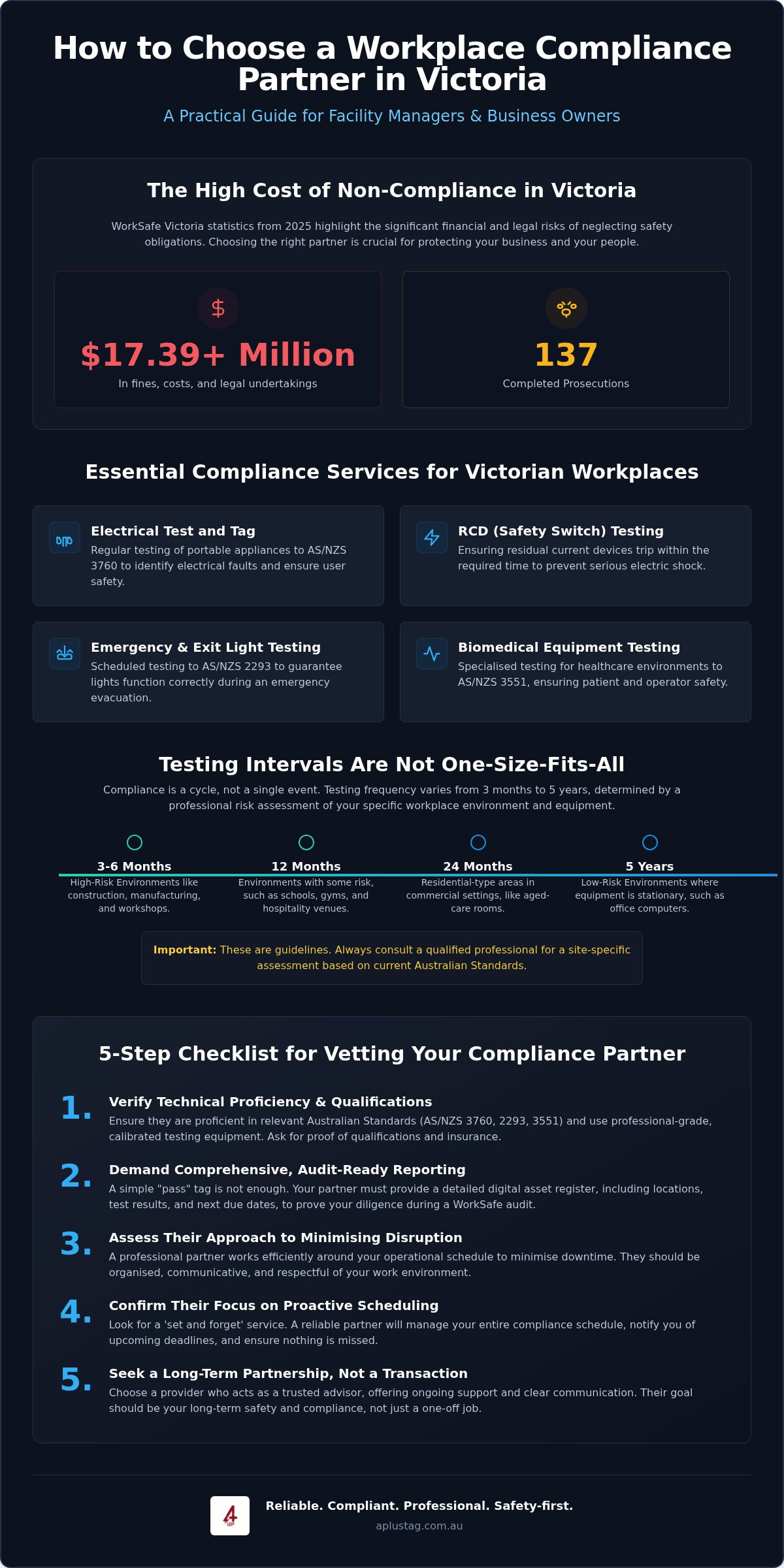
In 2025, WorkSafe Victoria completed 137 prosecutions that resulted in over $17.39 million in fines, costs, and legal undertakings. For facility managers and business owners, these figures highlight the weight of safety obligations, yet maintaining a compliant site often feels like a constant struggle against shifting deadlines and technical jargon. You’ve likely dealt with the frustration of contractors who disrupt your daily operations or records that are too disorganised to help during an unexpected audit. Understanding how to choose a workplace compliance partner in Victoria is the most effective way to replace this uncertainty with a reliable, systematic framework.
We agree that safety shouldn’t come at the cost of your productivity. This guide provides a clear roadmap to finding a professional partner who manages your recurring maintenance schedules and delivers audit-ready asset registers with minimal disruption. You’ll learn exactly what to look for in a provider to ensure your site remains compliant with current standards, such as AS/NZS 3760:2022. By the end of this article, you’ll have the practical knowledge needed to secure a ‘set and forget’ compliance solution that keeps your Victorian workplace safe and your documentation flawless.
Key Takeaways
- Learn how to choose a workplace compliance partner in Victoria by prioritising technical proficiency and comprehensive reporting over simple “pass” tags.
- Understand the importance of current Australian Standards, including AS/NZS 3760:2022 and AS/NZS 2293, to ensure your site meets WorkSafe Victoria expectations.
- Discover how testing intervals vary from 3 months to 5 years based on your specific environment, equipment type, and professional risk assessment.
- Identify the essential features of audit-ready asset registers and compliance reports that simplify long-term record-keeping and due-date tracking.
- Utilise a practical 5-step checklist to vet potential partners for their ability to provide a “set and forget” maintenance schedule with minimal operational disruption.
Navigating Victorian Workplace Safety and Compliance Requirements
Workplace compliance in Victoria is defined by the rigorous standards managed by WorkSafe Victoria. It isn’t merely a checkbox exercise; it’s an ongoing commitment to ensuring every piece of electrical equipment and safety system is fit for purpose. For site managers and business owners, meeting these expectations requires a thorough understanding of Australian workplace safety legislation. This legal framework ensures that hazards are identified and risks are minimised before they lead to workplace incidents.
A common mistake is viewing compliance as a one-off event. In reality, it is a recurring cycle of inspection, testing, and documentation. When considering how to choose a workplace compliance partner in Victoria, it’s vital to select a team that views safety as a long-term partnership rather than a fleeting transaction. A reliable partner helps you stay ahead of expiry dates rather than reacting to them after they’ve passed. Please note that this guide must be read in conjunction with AS/NZS 3760:2010 as a whole, and particularly clause 2.1.
The Role of WorkSafe Victoria and Australian Standards
WorkSafe Victoria acts as the state’s regulator, conducting inspections and audits to ensure businesses adhere to the Occupational Health and Safety Act 2004. They look for evidence that your organisation has followed specific Australian Standards, such as AS/NZS 3760:2022 for electrical safety and AS/NZS 2293 for emergency lighting. True compliance relies heavily on verifiable records. While safe equipment is the goal, you cannot prove your diligence during an audit without clear reporting and detailed asset registers. A professional partner provides these compliance services to ensure your documentation is always organised and ready for review.
Key Compliance Obligations for Victorian Business Owners
Obligations vary significantly depending on your specific industry and environment. A construction site in Melbourne faces different physical risks than a corporate office or a healthcare facility. High-risk environments, where equipment is subject to moisture, heat, or frequent movement, require more frequent testing than low-risk areas. Local expertise is essential here. A specialist who understands Victorian regulations can help you differentiate between mandatory testing requirements and best-practice risk management. This proactive approach is a core part of making workplace compliance easier to manage, ensuring safety protocols are integrated into your daily operations without causing unnecessary friction.
Essential Criteria for Evaluating a Victorian Compliance Specialist
Selecting a provider requires more than just checking a price list; it involves finding a team that integrates seamlessly with your operations. When you’re considering how to choose a workplace compliance partner in Victoria, technical depth and the ability to manage multi-site requirements are paramount. A specialist should offer a comprehensive suite of compliance services that cover everything from electrical safety to fire protection. This allows you to consolidate your safety obligations under one reliable organisation, reducing the administrative burden on your team.
Technical Proficiency and Specialised Standards
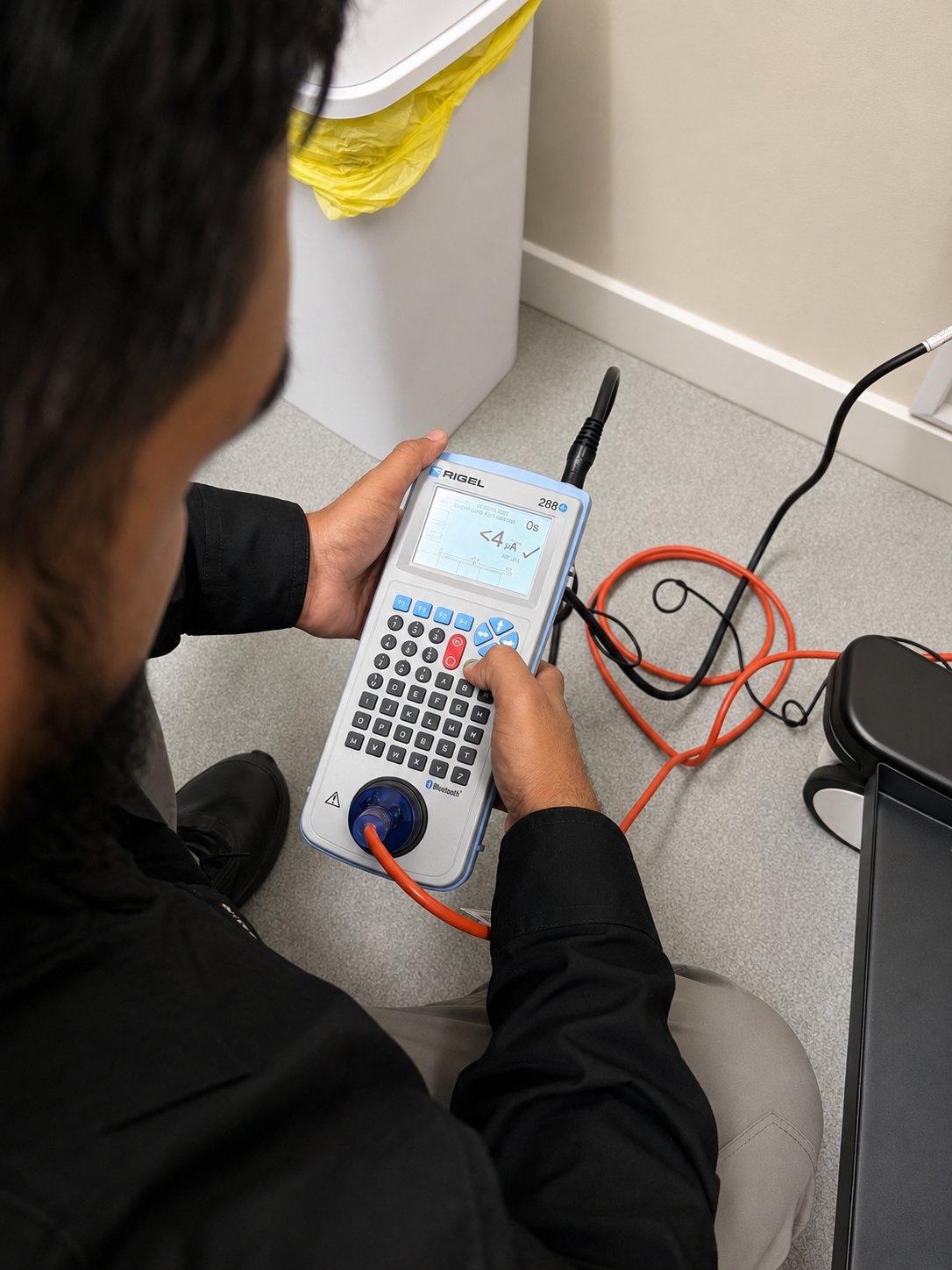
A professional partner demonstrates expertise across diverse and demanding environments. For instance, healthcare facilities require a team that understands biomedical devices and the specific requirements of AS/NZS 3551. This level of technical literacy extends to rcd testing and emergency lighting maintenance under AS/NZS 2293. To ensure accuracy, your partner should use professional-grade equipment like the Rigel 288+ biomedical safety analyser. This precision is essential for meeting the WorkSafe Victoria compliance code, which provides the practical guidance needed to maintain a safe working environment.
Reporting and Asset Management Systems
The quality of documentation is often what separates a basic contractor from a dedicated compliance partner. A digital asset register is a non-negotiable tool for modern facility managers. It provides a searchable, audit-ready record of every item on your site, making it easy to demonstrate your safety efforts during a WorkSafe inspection. Look for a system that includes automated due-date reminders. These help you maintain a ‘set and forget’ schedule so you never miss a critical testing window.
Effective reporting also provides clear guidance when equipment fails. Instead of just leaving a ‘fail’ tag, a dependable partner will provide detailed information on why the item failed and offer post-repair guidance in line with AS/NZS 5762. This systematic approach ensures you aren’t left with gaps in your safety records. If you’re managing multiple locations across Melbourne or regional Victoria, ensure your partner has the logistical capability to coordinate testing across all sites with consistent reporting standards. If you’re ready to improve your site’s safety records, it’s a good time to discuss a compliance schedule with a specialist who understands the Victorian landscape.
Understanding Testing Intervals and Operational Requirements
Testing frequencies aren’t arbitrary; they’re determined by the nature of the equipment and the environment where it’s used. These requirements ensure that potential faults are identified before they cause injury or damage. When you’re deciding how to choose a workplace compliance partner in Victoria, look for a provider that can accurately assess your site’s specific risks. These assessments are a fundamental part of complying with Victorian workplace safety laws, which place a clear duty on employers to maintain a safe working environment.
Standard intervals for testing and tagging include:
- 3 months: Construction, demolition, and building sites.
- 6 months: Factories, manufacturing plants, and commercial cleaning equipment.
- 12 months: Hostile environments where equipment is subject to moisture, heat, or dust.
- 2 years: Residential accommodation such as aged-care facilities or hotels.
- 5 years: Low-risk office environments where cables are rarely moved or disturbed.
Please be aware that these requirements vary based on workplace type, equipment classification, and specific risk assessments. It’s vital to obtain site-specific professional guidance to ensure you’re meeting your legal obligations. This guide must be read in conjunction with AS/NZS 3760:2010 as a whole, and particularly clause 2.1.
Industry-Specific Testing Frequencies
High-risk environments, like construction sites in Melbourne, require 3-month testing because tools are often exposed to harsh weather and mechanical stress. Conversely, a corporate office might only need testing every 5 years for stationary equipment. A professional partner provides the expertise to distinguish between these needs, ensuring you don’t over-test low-risk items or neglect high-risk gear. This tailored approach is a core part of compliance services that help Victorian businesses reduce risk and stay organised.
Minimising Disruption During On-Site Testing
A significant pain point for many managers is the disruption caused by on-site technicians. A dependable compliance partner avoids this by offering flexible scheduling, including the capability to work outside normal operating hours. This is particularly beneficial for multi-site organisations across Victoria, where coordinating schedules across several branches can be complex. By managing these recurring cycles for you, a professional partner ensures your productivity remains high while your safety records stay current. This methodical management turns compliance from a stressful task into a predictable, ‘set and forget’ part of your maintenance schedule.
5-Step Checklist for Vetting Your Compliance Partner
Selecting a provider requires a methodical approach to ensure they can meet the high standards expected by Victorian regulators. When considering how to choose a workplace compliance partner in Victoria, you should look for a team that prioritises accuracy over speed. A thorough vetting process helps you avoid the common pitfalls of disorganised records or missed testing intervals. This guide must be read in conjunction with AS/NZS 3760:2010 as a whole, and particularly clause 2.1.
Use this five-step framework to evaluate potential specialists:
- Step 1: Verify Technical Expertise. Confirm their team is fully conversant with the current AS/NZS 3760:2022 and AS/NZS 2293 standards. They should demonstrate a clear understanding of how these apply to your specific industry.
- Step 2: Review Sample Documentation. Request a sample asset register and compliance report. Effective documentation should be digital, searchable, and audit-ready, providing a clear history for every item tested.
- Step 3: Assess Logistical Capability. If you manage multiple sites across Melbourne or regional Victoria, ensure the partner has the resources to coordinate a consistent schedule across all locations.
- Step 4: Confirm Failure Protocols. A professional partner doesn’t just apply a ‘fail’ tag. They should provide immediate notification of hazards and offer post-repair guidance in accordance with AS/NZS 5762.
- Step 5: Check for Automated Systems. Look for a provider that uses automated reminders. This ensures your recurring maintenance remains on track without requiring constant administrative oversight from your team.
Assessing Professionalism and Communication
Clear communication is the foundation of a successful safety program. Your partner should provide transparent updates before, during, and after each site visit. This helps you manage expectations and ensures your staff are aware of any minor disruptions. Look for a ‘safety-first’ culture that avoids the ‘tick-and-flick’ approach. Punctuality and professional conduct are non-negotiable, as technicians often work in active environments like schools, hospitals, or busy warehouses where order is essential.
Long-Term Partnership vs. One-Off Service
Treating safety as a one-off task often leads to compliance gaps. It is much more effective to establish a long-term compliance monitoring relationship. A steady partner gets to know your site’s specific layout and equipment, which leads to more efficient testing cycles over time. You can review our services to see how a systematic approach to maintenance reduces your administrative burden and helps your organisation stay organised and prepared for any audit.
Partnering with A Plus Compliance Services in Victoria
When you’re deciding how to choose a workplace compliance partner in Victoria, you aren’t just looking for a technician; you’re securing the long-term safety and operational continuity of your business. A plus compliance services provides clear, reliable and professional compliance support from our Melbourne headquarters. We serve a broad range of areas, from Scoresby to Dandenong, ensuring that local organisations have access to methodical and precise safety testing. Our goal is to act as a dependable partner that simplifies your obligations and provides a sense of order for your facility management.
Choosing the right partner means finding a team that values a safety-first culture. We understand that site managers face constant pressure to maintain productivity while meeting strict regulatory standards. By providing a systematic management framework, we help you replace the stress of manual tracking with a professional, automated solution. This guide must be read in conjunction with AS/NZS 3760:2010 as a whole, and particularly clause 2.1, to ensure your site remains fully aligned with current requirements.
Comprehensive Safety Solutions for Victorian Workplaces
Our team offers a full suite of compliance services designed to cover every aspect of your facility’s safety. We provide Electrical Test and Tag, RCD testing, and Emergency and exit light testing (AS/NZS 2293). We also manage specialised fire extinguisher testing requirements Victoria businesses must follow to maintain their commercial safety profiles. Our experience spans across multiple sectors, providing reliable support for schools, hospitals, warehouses, and active construction sites.
We use high-grade technical equipment, such as the Rigel 288+ biomedical safety analyser, to deliver accurate results for clinical and specialized environments. This technical proficiency ensures that every asset on your register is tested to the highest standard. Making workplace compliance easier to manage is at the core of what we do, allowing you to focus on your daily operations while we maintain your safety records.
Getting Started with Your Compliance Assessment
Establishing a long-term relationship with a compliance expert is the most effective way to reduce operational risk. When you partner with us, you receive clear reporting, dependable service and ongoing compliance support. Our digital asset registers and automated reminders ensure you never miss a testing interval, keeping your business prepared for any audit or inspection. This proactive approach is a fundamental part of helping Victorian businesses reduce risk and stay organised.
If you’re ready to transition to a more reliable compliance framework, we invite you to discuss a maintenance schedule tailored to your site’s specific needs. You can contact A plus compliance services on 1300 427 158 to arrange a professional assessment or request a quote for your facility. Reliable. Compliant. Professional. Safety-first.
Securing Your Workplace with Professional Compliance
Identifying a dependable specialist involves more than finding someone with a testing device. It requires a partner who understands the nuances of Victorian safety regulations and provides the clear, digital documentation needed for audit readiness. By following a structured vetting process, you ensure your provider integrates maintenance into your daily operations with minimal disruption. This methodical management turns complex safety obligations into a predictable part of your business routine, giving you the confidence that your site is fully protected.
Understanding how to choose a workplace compliance partner in Victoria allows you to move away from reactive repairs and toward a proactive ‘set and forget’ maintenance schedule. This approach ensures your site remains aligned with specialised standards like AS/NZS 3760, 3551, and 2293 while significantly reducing your administrative burden. A Plus Compliance Services provides clear reporting, dependable service and ongoing compliance support to help your organisation stay prepared. Reliable. Compliant. Professional. Safety-first.
Establishing a long-term partnership ensures your facility stays organised and safe for years to come. We look forward to helping you simplify your compliance journey.
Frequently Asked Questions
What is electrical test and tag and why is it required in Victoria?
Electrical test and tag involves the formal inspection and safety testing of portable electrical equipment, followed by clear identification and record keeping. In Victoria, this process is essential for meeting your duty of care under the Occupational Health and Safety Act 2004. It ensures that potential hazards are identified before they cause injury. Please note that all testing information must be read in conjunction with AS/NZS 3760:2010 as a whole, and particularly clause 2.1.
How often does equipment need to be tested at my Victorian workplace?
Testing intervals aren’t the same for every business. They’re determined by your environment, equipment type, and specific risk management procedures. For example, high-risk construction sites require testing every 3 months, while low-risk offices might only need a 5-year cycle. Because requirements vary so significantly, it’s best to consult A Plus Compliance Services on 1300 427 158. We can help you organise the correct schedule for your specific Victorian site to ensure total compliance.
Can compliance testing be completed outside normal operating hours?
Yes, we understand that site managers need to maintain productivity without interruptions. A Plus Compliance Services can arrange for technicians to visit your site outside normal operating hours to minimise disruption. Whether you operate a school, a hospital, or a busy warehouse in Melbourne, we work around your site access and operational needs. This flexibility is a key factor when considering how to choose a workplace compliance partner in Victoria for long-term support.
What happens when an item fails an electrical safety test?
When an item fails an electrical safety test, it’s clearly identified with a ‘fail’ tag and recorded in your compliance report. You must immediately remove the faulty item from service to prevent use. You can then choose to repair or replace the equipment. If you decide to repair it, the item must be re-tested before it’s reintroduced to service. For all post-repair testing requirements, please refer to AS/NZS 5762.
Can A Plus Compliance Services manage multiple locations across Victoria?
We certainly can. A Plus Compliance Services coordinates testing, reporting, and asset registers across multiple sites throughout Victoria. From our headquarters in Scoresby, we serve areas including Dandenong, Clayton, and Pakenham, as well as regional locations. This multi-site capability allows facility managers to consolidate their safety obligations with one reliable partner, ensuring consistent reporting and a unified compliance schedule for all Victorian branches, regardless of their location or industry sector.
Do you provide reminders for future testing to ensure ongoing compliance?
Yes, we provide automated due-date reminders as part of our recurring maintenance programs. This ‘set and forget’ system ensures you never miss a critical testing window, which is vital for maintaining a compliant workplace. Our scheduled maintenance helps Victorian businesses stay organised by tracking every asset’s expiry date. This proactive approach reduces the administrative burden on your team and ensures your safety records are always current and ready for a WorkSafe Victoria audit.
What standards govern biomedical equipment testing in clinical settings?
Biomedical equipment testing in clinical settings is governed by the AS/NZS 3551 standard. This specialised process ensures that medical electrical equipment is safe for both patients and staff. At A Plus Compliance Services, we use the Rigel 288+ biomedical safety analyser to perform these precise inspections. This high level of technical proficiency is essential for healthcare facilities, aged-care homes, and medical clinics that must adhere to strict clinical risk classifications and safety protocols.
Why is an asset register important for workplace safety audits?
An asset register is a comprehensive digital record of every piece of equipment tested on your site. It’s critical for audits because it provides verifiable evidence that you’re meeting your safety obligations. When you’re deciding how to choose a workplace compliance partner in Victoria, ensure they provide organised reports that include asset IDs and test histories. These records allow you to quickly demonstrate compliance to WorkSafe Victoria inspectors and track your long-term maintenance cycles with precision.
