On-Site Electrical Testing: 2026 Victorian Workplace Guide
Could a single overlooked power lead or a faulty microwave be the factor that brings your Melbourne facility to a standstill? While the risk of an electrical incident is a constant concern for Victorian business owners, professional on-site electrical testing shouldn’t be a source of daily stress or operational friction. We understand that you’re balancing the need for absolute safety with the practical reality of running a busy workplace. You likely want to meet your legal obligations without seeing your team’s productivity drop due to intrusive maintenance schedules.
This 2026 guide explains how systematic on-site electrical testing ensures your workplace remains compliant, safe, and fully operational with minimal disruption. By following a structured approach to safety, you can transform a complex regulatory requirement into a straightforward part of your business routine. We’ll outline a clear compliance roadmap based on the current AS/NZS 3760:2022 standards, explain how to manage varying testing intervals, and show you how accurate asset registers provide essential protection for insurance and audits. Whether you manage a school, a healthcare facility, or a warehouse, this information helps you maintain a safe environment for every staff member and visitor.
Key Takeaways
- Understand how systematic visual and electrical inspections identify potential hazards in your facility before they lead to equipment failure or safety incidents.
- Learn how to meet your ‘duty of care’ obligations under Victorian OHS regulations through professional on-site electrical testing that provides a transparent audit trail.
- Discover how a methodical approach to the Test and Tag process helps your organisation maintain high safety standards with minimal disruption to daily operations.
- Identify why testing intervals vary based on your specific workplace environment and equipment type to ensure you remain compliant with Australian Standards.
- See how partnering with a dependable compliance expert simplifies workplace safety and ensures you never miss a scheduled testing deadline.
What is On-Site Electrical Testing for Victorian Workplaces?
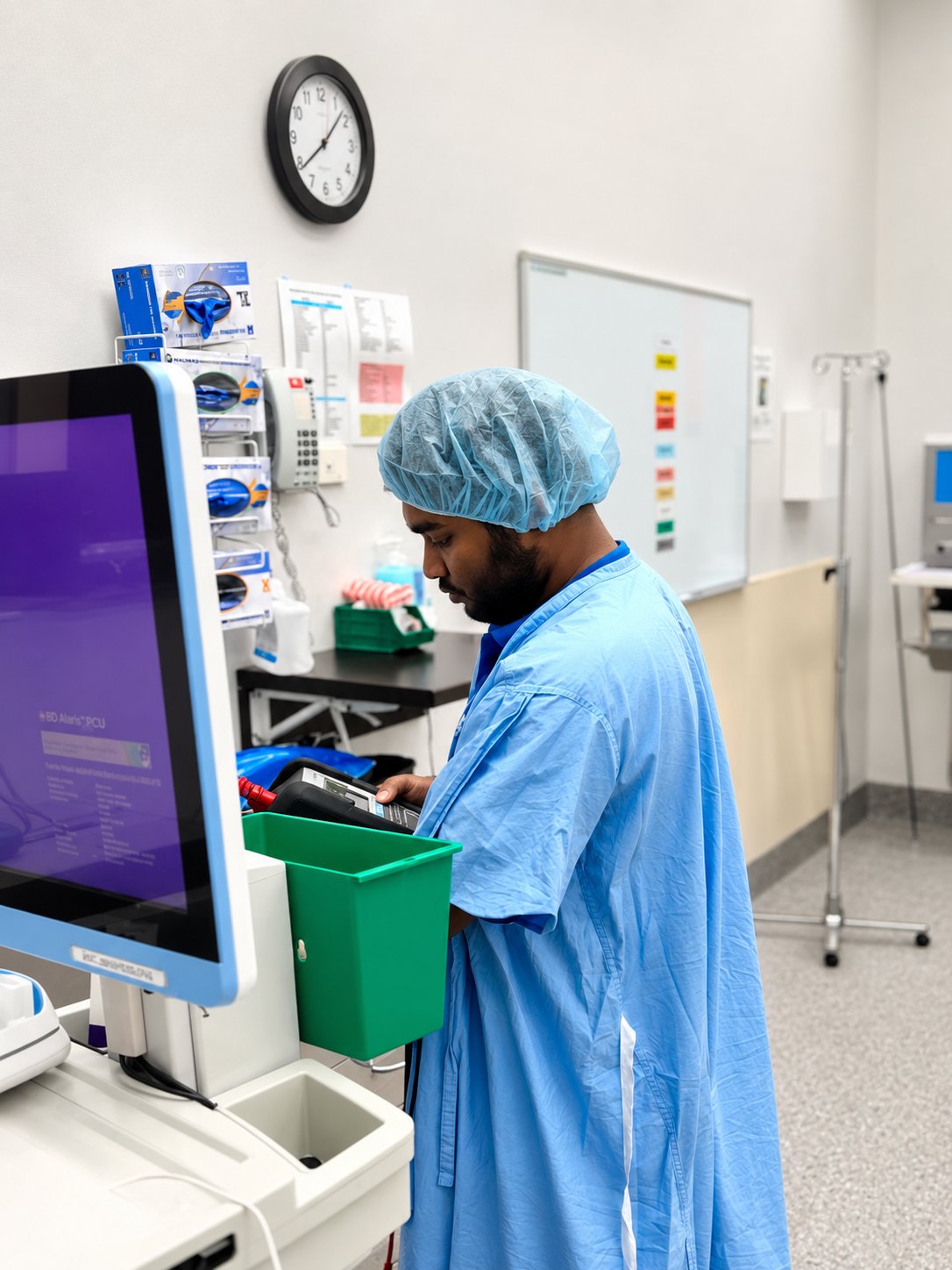
On-site electrical testing is a systematic process designed to inspect and verify the safety of portable electrical appliances within a professional environment. In Victoria, this procedure is most commonly known as “Test and Tag.” It involves a rigorous two-stage approach where each item is first visually inspected for physical damage and then electrically tested using specialised equipment. By conducting these assessments at your actual place of business, you can maintain operational continuity while ensuring that every piece of equipment, from a kitchen kettle to a workshop drill, is safe for your team to use.
The Australian Standards dictate that these inspections must be carried out by a “competent person.” This is someone who has the necessary training, skills, and experience to perform the tasks correctly and interpret the results accurately. Relying on a professional partner ensures that the nuances of different equipment types are understood and that any potential hazards are identified before they cause an incident. Portable appliance testing forms the backbone of a reliable workplace safety strategy, providing a clear record of when an item was last checked and when its next inspection is due.
During the process, the technician looks for specific faults that aren’t always obvious to the daily user. While the visual check identifies issues like frayed insulation or damaged plugs, the electrical test measures earth continuity and insulation resistance. It’s important to remember that this information must be read in conjunction with AS/NZS 3760:2022 as a whole, and particularly clause 2.1, to ensure your organisation remains fully compliant with the latest safety benchmarks.
The Scope of Electrical Safety Compliance
The scope of safety testing covers various categories of equipment found in Victorian workplaces. This includes Class I appliances, which are earthed, and Class II appliances, which are double-insulated. Testing also extends to cord sets, extension leads, and EPODs (commonly known as power boards). A Plus Compliance Services integrates these diverse requirements into a single, organised site visit. This methodical approach means your electrical assets, RCDs, and even fire safety equipment can be serviced in one window, reducing the administrative burden on facility managers.
Testing Residual Current Devices (RCDs), or safety switches, is a vital part of this holistic safety program. These devices are designed to disconnect the power instantly if a leak is detected, preventing serious electric shocks. Regular verification ensures these life-saving components are functioning exactly as they should during an emergency.
Why “On-Site” Matters for Melbourne Businesses
For Melbourne organisations, having technicians perform testing at your facility is far more efficient than sending equipment away. It significantly reduces downtime and allows your staff to continue their work with minimal interruption. Technicians can work around your schedule, even outside of peak operating hours if necessary, to keep your business moving.
Performing tests on-site also allows for the real-time identification of “hostile environments.” These are areas where equipment is subject to moisture, heat, dust, or frequent movement, all of which can accelerate wear and tear. By seeing the equipment in its actual working context, a technician can provide better advice on appropriate testing intervals and maintenance. Ultimately, on-site electrical testing is a critical component of Victorian OHS risk management that provides immediate results and clear, actionable documentation.
The Importance of On-Site Testing for Workplace Safety
Electrical hazards often remain invisible until a fault leads to a fire or an electric shock. In high-traffic Victorian environments like busy offices, gyms, or construction sites, equipment undergoes constant wear that can compromise internal wiring. Regular on-site electrical testing acts as a preventative shield, identifying these vulnerabilities before they escalate into dangerous incidents. By prioritising these checks, you directly reduce the risk of electrical fires, which often stem from faulty leads or overloaded circuits that haven’t been professionally verified.
Every facility manager and business owner in Victoria carries a significant “duty of care” to provide a safe environment for staff, contractors, and visitors. Adhering to workplace safety laws is not just a legal formality; it is a fundamental part of responsible operations. It is essential to state that all testing information must be read in conjunction with AS/NZS 3760:2010 as a whole, and particularly clause 2.1, to ensure your safety program meets the recognised benchmarks for compliance.
Maintaining an accurate asset register and thorough documentation also protects your organisation’s insurance standing. In the event of an incident, insurers require evidence that you’ve taken reasonable steps to maintain equipment safety. Beyond portable leads, incorporating thermal imaging into your switchboard maintenance helps identify hot spots and loose connections. This proactive technology detects faults that are impossible to see with the naked eye, preventing costly power failures and equipment damage.
Regulatory Compliance in Victoria
Effective compliance monitoring keeps your business aligned with evolving safety expectations and provides an audit-ready trail. A detailed asset register allows you to track every piece of equipment, its location, and its test history over time. This systematic approach is far superior to “cheap-price” services that often skip comprehensive reporting. Without clear documentation, you’re left exposed during safety audits or insurance reviews, making a professional partnership a vital investment in long-term risk reduction.
Industry-Specific Safety Needs
Different sectors face unique electrical challenges that require a tailored approach. For example, healthcare facilities must manage biomedical devices under the strict AS/NZS 3551 standard to ensure patient safety. Meanwhile, warehouses in manufacturing hubs like Mulgrave and Dandenong deal with “hostile” environments where vibration and dust can damage heavy-duty machinery. Schools and childcare centres also require diligent testing to ensure that shared appliances and learning tools remain safe for students and staff alike. If you haven’t reviewed your safety schedule recently, you might find it helpful to discuss a compliance plan tailored to your specific industry.
What to Expect During an On-Site Compliance Visit
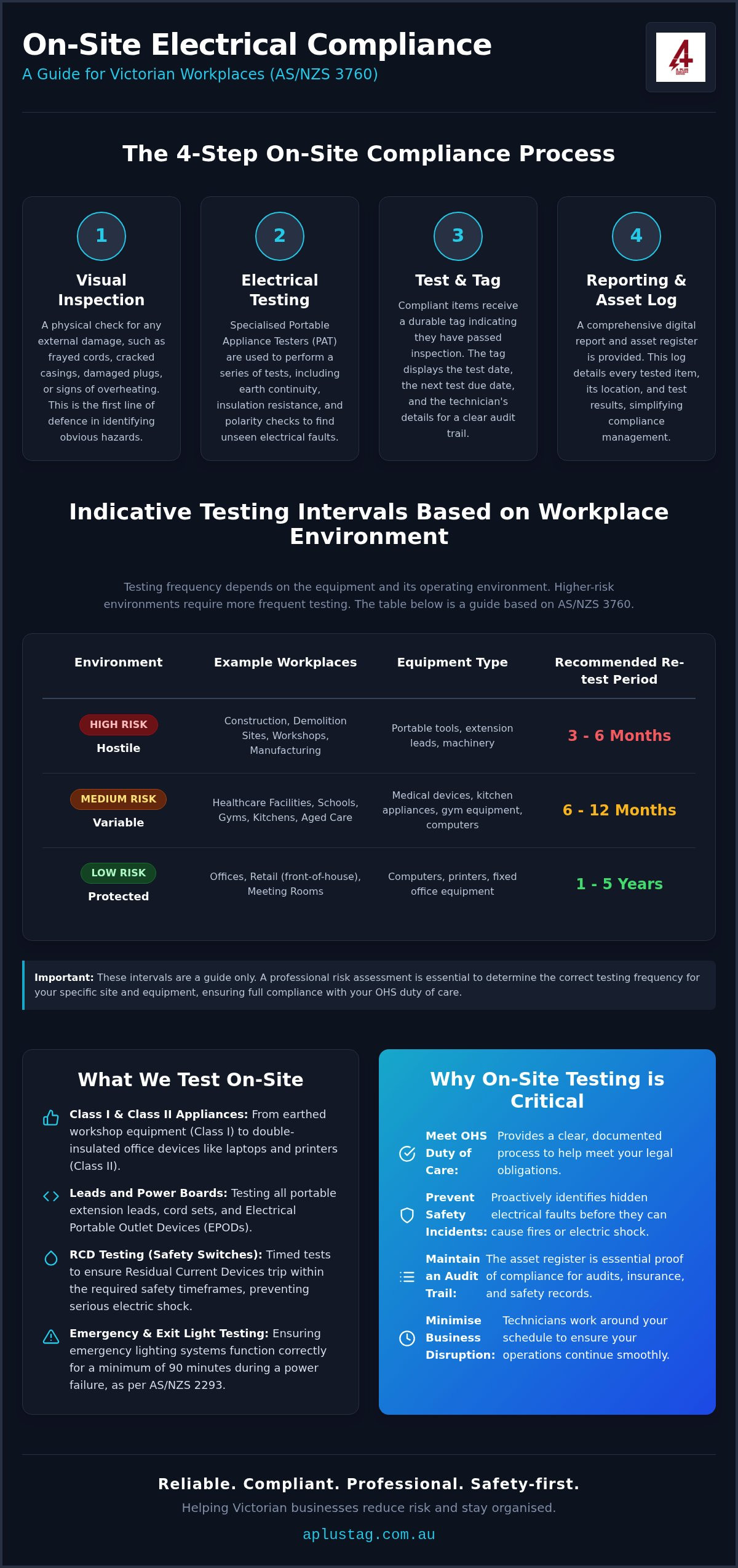
When our technicians arrive for a scheduled visit, the process begins with a comprehensive site walk-through. This initial step allows us to identify all electrical assets and assess the specific environments where they are used. It’s a methodical start that ensures no equipment is overlooked, whether it’s a hidden power board under a desk or heavy machinery on a factory floor. By understanding the context of your equipment use, we can provide more accurate advice on future testing cycles.
The visual inspection is arguably the most critical phase of the visit. Our experts look for physical indicators of risk, such as frayed insulation, cracked plug casings, or discolouration that suggests overheating. Identifying these issues early is a key part of adhering to the WorkSafe Victoria electrical safety guidelines, which emphasise regular maintenance to prevent workplace accidents. Statistics show that a large majority of electrical faults are detected during this visual stage before any specialised equipment is even switched on.
Following the visual check, we move into the electrical testing phase. Using a calibrated Portable Appliance Tester (PAT), we perform earth bond and insulation resistance checks. This specialised equipment detects internal faults that aren’t visible to the eye. It is important to remember that this on-site electrical testing information must be read in conjunction with AS/NZS 3760:2010 as a whole, and particularly clause 2.1. Once an item passes, it’s fitted with a durable tag and logged into your digital asset register, providing you with a clear, organised audit trail.
Minimising Disruption to Your Operations
We recognise that stopping work for safety checks isn’t always convenient. To help Victorian businesses stay productive, we offer flexible scheduling, including testing outside of normal operating hours for hospitality venues or 24/7 medical facilities. Our technicians are trained to work discreetly around your staff in busy warehouses or construction zones. This clear, reliable and professional approach ensures your compliance is handled with the least possible impact on your daily output.
Managing Failed Items
If an item fails a test, it’s immediately identified and withdrawn from service to eliminate the risk of injury. We apply a specialised “Danger” tag and record the specific reason for failure in your log. It’s a common misconception that only pass records matter; however, documenting failed items is vital for proving you’ve actively managed hazards during an audit. For any equipment that is subsequently fixed, post-repair testing must refer to AS/NZS 5762 to ensure it’s safe to return to the workspace.
Testing Intervals: How Often is On-Site Testing Required?
Determining the correct frequency for your safety inspections is a vital part of maintaining a compliant workplace. It’s essential to state that this information must be read in conjunction with AS/NZS 3760:2010 as a whole, and particularly clause 2.1. Testing intervals aren’t universal; they are determined by your specific environment, the type of equipment in use, and a thorough risk assessment. Professional on-site electrical testing ensures that your assets are checked at the appropriate times to manage wear and tear effectively.
Hostile environments, such as those where equipment is exposed to moisture, dust, or heavy vibration, naturally accelerate the deterioration of electrical components. These conditions require more frequent monitoring to prevent safety incidents. Using a scheduled test and tag reminder service helps Victorian business owners stay organised and ensures that no deadline is missed, keeping your compliance status current and your staff protected.
AS/NZS 3760:2010 Standard Intervals
The standard provides a clear framework for different workplace categories to help managers plan their maintenance cycles. Adhering to these intervals is a practical way to demonstrate your commitment to safety. The following categories outline common requirements for many Victorian organisations:
- Factories and workshops (Category a): These settings usually require a general inspection and test every 6 months due to the higher risk of physical damage to tools and machinery.
- Hostile environments (Category b): Equipment that is subject to flexing or potential abuse in demanding conditions should be tested every 12 months.
- Residential-type areas (Category d): In these environments, portable equipment typically requires testing every 3 months, while fixed equipment is checked every 6 months.
- Commercial cleaning equipment (Category e): Because cleaning tools are frequently moved and used in various conditions, portable items in this category require testing every 12 months.
High-Risk and Hire Equipment
Certain sectors demand even more rigorous oversight due to the nature of the work performed. Construction sites and hire equipment providers typically operate under high-risk conditions where equipment is moved frequently and used by multiple parties. For these reasons, a 3-month testing interval is generally required to maintain safety standards. For hire equipment specifically (Category f), a general inspection is required every 6 months, in addition to a mandatory check prior to each hire to ensure the item is in safe working order before it reaches the customer.
In contrast, low-risk environments such as corporate offices or retail spaces have different needs. For non-flexing equipment that remains stationary, such as a desktop computer or a fixed printer, intervals can extend up to 5 years. However, even in these settings, on-site electrical testing remains necessary to identify faults that might occur over time. Obtaining site-specific professional guidance is the best way to ensure your schedule is accurate and legally sound.
Professional Compliance Support in Melbourne and Victoria
Choosing a local partner for your electrical safety needs ensures that your organisation benefits from technicians who understand the specific regulatory landscape of Victoria. A Plus Compliance Services has established itself as a dependable ally for businesses across the state, providing specialised support that goes beyond a simple check-box exercise. Our team services a wide range of Melbourne suburbs, from inner hubs like St Kilda and Caulfield to the rapid growth corridors of Pakenham and Berwick. This local presence allows us to be responsive and punctual, which are essential qualities for maintaining long-term safety schedules.
For organisations managing multiple sites across Victoria, coordination can often become an administrative burden. We specialise in multi-site management, ensuring that every facility under your care follows a consistent testing cycle and receives the same high standard of documentation. This structured approach is central to our commitment to providing clear reporting, dependable service and ongoing compliance support. By centralising your safety data, you can easily track the status of every asset across your entire Victorian portfolio, helping your business reduce risk and stay organised.
A Comprehensive Safety Solution
Safety compliance is most effective when managed holistically rather than in isolation. We offer an integrated solution that combines on-site electrical testing with other critical services such as RCD testing and emergency and exit light inspections. During a single visit, our technicians can also verify that fire equipment, including extinguishers and blankets, is fully compliant and ready for use. This “one-visit” model significantly minimises disruption to your daily operations while ensuring no safety component is overlooked.
To provide an even deeper level of protection, we incorporate thermal imaging for commercial switchboards. This non-invasive technology identifies loose connections and imbalanced loads that could lead to unexpected power failures or fire hazards. It is a proactive step that complements the standard Test and Tag process, offering facility managers greater peace of mind regarding their fixed electrical infrastructure. It is important to remember that all information provided must be read in conjunction with AS/NZS 3760:2010 as a whole, and particularly clause 2.1.
Get Started with a Site Assessment
Arranging a professional assessment is the first step toward making workplace compliance easier to manage. Our team will work with you to identify all electrical assets and determine the appropriate testing intervals based on your unique environment and equipment type. This assessment forms the foundation of a structured asset register, which serves as your primary evidence of compliance during a safety audit or insurance review. Having an organised, digital record of your safety history simplifies your responsibilities and ensures you are always prepared for scrutiny.
A well-maintained safety program is an investment in the longevity of your equipment and the well-being of your people. We act as your proactive partner, sending timely reminders for upcoming tests so you never have to worry about falling behind on your obligations. If you are ready to discuss a tailored compliance schedule for your Melbourne workplace, contact A Plus Compliance Services on 1300 427 158 to arrange a consultation with our experienced team.
Maintaining a Safe and Compliant Victorian Workplace
Ensuring your facility meets the latest Australian Standards doesn’t have to be a source of operational stress. By implementing a systematic approach to on-site electrical testing, you protect your team while building a robust audit trail for insurers and regulators. We’ve explored how professional inspections identify hidden hazards and how tailored testing intervals keep your organisation aligned with safety benchmarks. It’s essential to state that all testing information must be read in conjunction with AS/NZS 3760:2010 as a whole, and particularly clause 2.1.
A Plus Compliance Services is built on being reliable, compliant, professional, and safety-first. We focus on helping Victorian businesses reduce risk and stay organised through clear reporting and automated due-date reminders. This proactive partnership allows you to focus on your core operations while we handle the complexities of electrical safety and documentation. Our goal is to provide a stress-free experience that prioritises the long-term order of your workplace.
Taking these steps today creates a more predictable and secure environment for everyone in your facility. We look forward to helping you manage your long-term compliance needs with precision and care.
Frequently Asked Questions
What exactly is electrical test and tag?
Electrical test and tag is the systematic inspection and safety testing of portable electrical equipment combined with rigorous record keeping. This process involves a visual check for physical damage followed by an electrical test to verify insulation and earthing. It’s a critical part of on-site electrical testing that helps Victorian businesses identify hazards before they cause an incident. Every item is identified with a unique tag that indicates the test date and the next scheduled inspection.
How often does my workplace equipment need to be tested and tagged?
Testing intervals are determined by your specific workplace environment, the type of equipment you use, and your internal risk-management procedures. It is essential to state that this information must be read in conjunction with AS/NZS 3760:2010 as a whole, and particularly clause 2.1. While construction sites often require checks every 3 months, low-risk offices might only need testing every 5 years. A Plus Compliance Services can help you organise the correct schedule for each site.
Can on-site testing be completed outside normal operating hours?
Yes, we can arrange for testing to be completed outside your normal operating hours to ensure minimal disruption to your business. We understand that hospitality venues, 24/7 medical clinics, and busy warehouses often find it difficult to pause operations during the day. Scheduling can be adjusted to suit your site access requirements, allowing our technicians to perform comprehensive safety checks while your team stays focused on their primary tasks and productivity.
What happens if an item fails its electrical safety test?
If an item fails its safety test, it is clearly identified with a Danger tag and recorded in your compliance report. You must remove the faulty equipment from service immediately to prevent any risk of electric shock or fire. You can then choose to repair or replace the item. If you decide to fix the equipment, all post-repair testing must refer to AS/NZS 5762 to ensure it’s safe for re-introduction to your workspace.
Does new electrical equipment need to be tested before use?
New electrical equipment should be visually inspected and tagged before its first use in the workplace. While some items might not require immediate electrical testing, they must be entered into your asset register and identified as safe by a competent person. Once in service, the equipment will follow the standard testing cycles determined by its environment. For hire equipment, our records indicate that a check is mandatory prior to hire to ensure the item remains safe for the user.
Can you manage compliance testing for multiple locations across Victoria?
A Plus Compliance Services can coordinate testing, reporting, and asset registers across multiple locations throughout Victoria. Whether you manage a chain of gyms or several healthcare facilities, we provide a unified compliance program that keeps your records organised and accessible. Our team works across Melbourne suburbs like Dandenong, Clayton, and Pakenham, ensuring that every site under your management adheres to the same high safety standards and reporting protocols.
Do you provide reminders for when my next round of testing is due?
We provide automated due-date reminders and scheduled maintenance support as part of our recurring compliance programs. This service ensures you never have to worry about missing a deadline or falling out of compliance with Australian Standards. By proactively tracking your next testing round, we help Victorian businesses stay organised and reduce the risk of safety gaps. You’ll receive clear communication well in advance, allowing you to schedule visits at the most convenient times.
What is the difference between AS/NZS 3760 and AS/NZS 3551?
The primary difference lies in the type of equipment being tested and the specific safety standards required for different environments. AS/NZS 3760:2010 covers the general inspection and testing of portable electrical appliances found in most workplaces. In contrast, AS/NZS 3551 is a specialised standard for the management and safety testing of medical and biomedical equipment. Medical devices require more stringent verification procedures to ensure they are safe for clinical use and patient contact within healthcare environments.
