The Role of an Electrical Asset Register in Workplace Compliance: A Case Study
With 407 hospitalisations in Australia recorded during the 2024–25 period due to electric current exposure, the margin for error in workplace safety is non-existent. You likely already recognise that manually tracking every appliance, lead, and RCD across your facility is a time-consuming process prone to human error. It’s common to feel a sense of anxiety as safety audits approach, especially when there’s confusion regarding the different testing intervals required for various equipment types. Maintaining a comprehensive electrical asset register shouldn’t be a source of stress, yet for many managers, it remains a significant administrative hurdle.
This article will demonstrate how a structured electrical asset register streamlines your safety obligations and ensures your business remains audit-ready at all times. You’ll discover how a centralised, digital record provides automatic reminders for re-testing dates and gives you the confidence that your site meets AS/NZS 3760 standards. We’ll preview a practical case study that shows how moving from manual tracking to an organised system replaces uncertainty with professional order, allowing you to focus on your core operations while maintaining a safe, compliant environment for your team.
Key Takeaways
- Learn how a digital register serves as a legal safety record to meet Australian WHS obligations and AS/NZS 3760 requirements.
- Discover how a centralised system eliminates common multi-site issues like inconsistent records and overlooked equipment testing.
- Identify the critical data points, including unique asset IDs and barcoding, that make your facility audit-ready and easy to manage.
- Understand how professional testing services use specialised software to create an accurate electrical asset register with every visit.
- Gain a clear framework for maintaining your records between scheduled tests to ensure continuous compliance and workplace safety.
What is an Electrical Asset Register and Why is it Essential?
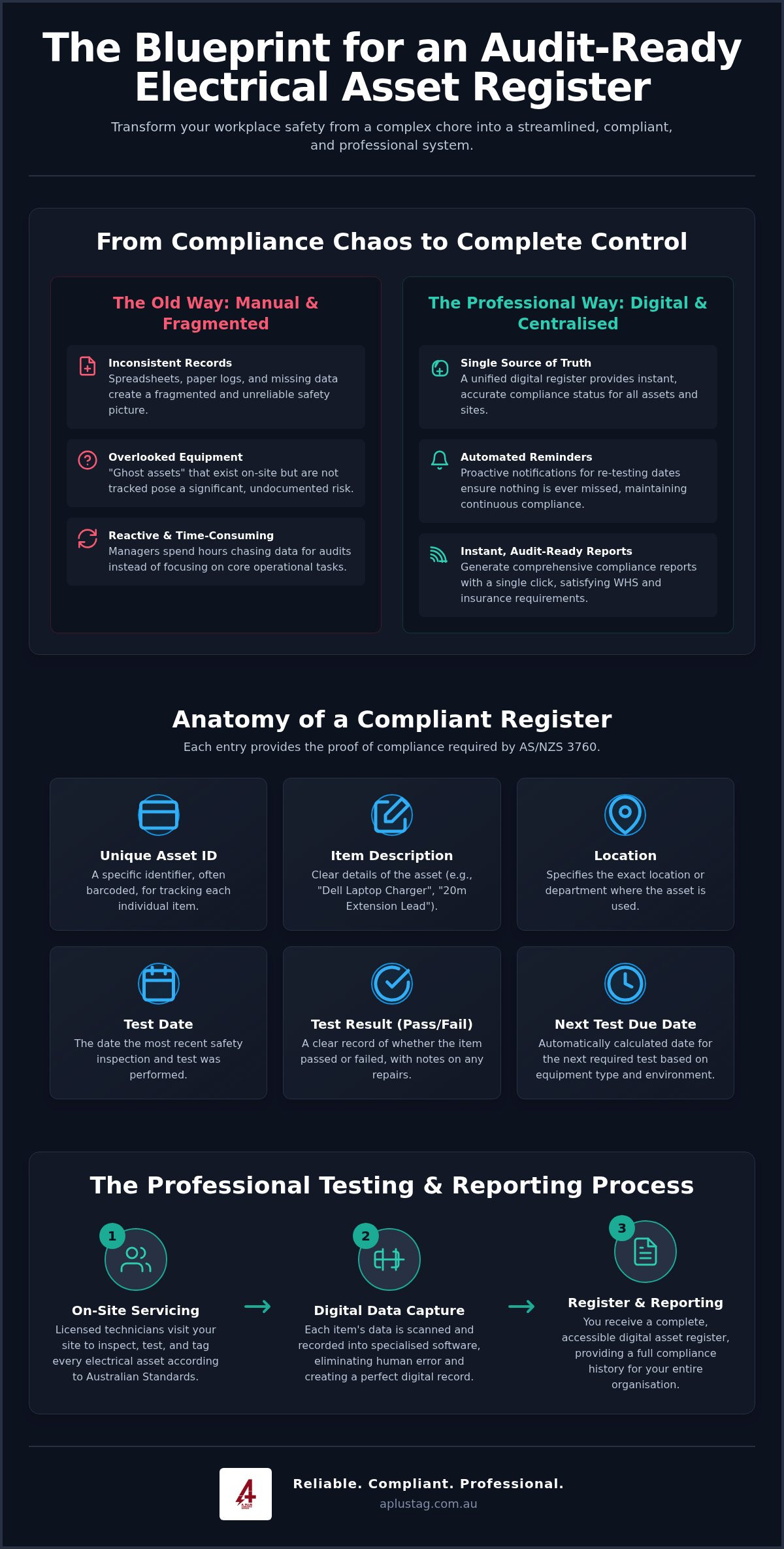
An electrical asset register functions as a comprehensive, living record that tracks the safety status and history of every electrical item within a business. While you might be familiar with the broader financial concept of What is a Fixed Asset Register?, a compliance-focused register prioritises safety and risk management over depreciation. It documents specific technical details such as unique asset IDs, test dates, results, and the physical location of equipment. This ensures that nothing is overlooked during a busy operational cycle, providing a level of detail that a general inventory list simply cannot match.
For any Australian business, this document serves as a vital component of workplace health and safety (WHS) management. It isn’t just about keeping a tally; it’s about active risk minimisation. By maintaining this structured data, facility managers can transition from reactive repairs to proactive maintenance scheduling. This approach ensures that every piece of equipment, from a simple office kettle to complex machinery, is safe for use by staff and visitors alike. It creates a steady narrative of safety that protects both the people in the building and the reputation of the organisation.
To better understand how asset management works in technical environments, watch this helpful video:
The Legal Framework: AS/NZS 3760 and Beyond
In Australia, AS/NZS 3760:2022 stands as the benchmark for in-service safety inspection and testing of electrical equipment. While the standard itself isn’t a law, it’s called up by WHS regulations as a primary method for demonstrating that a business has met its duty of care. An electrical asset register provides the “proof of compliance” that regulators and insurance providers require. If an incident occurs, having a documented history of testing and maintenance can be the difference between a minor record check and a major liability issue. This documentation is also critical for specialised environments, such as healthcare facilities, where AS/NZS 3551 mandates a documented management program for medical equipment.
Benefits of a Centralised Digital System
Moving away from traditional paper logs significantly reduces the risk of data loss and the burden of physical storage. A centralised digital system allows for instant searchability, which is invaluable during a surprise spot-check or a formal safety audit. For national organisations, digital records facilitate seamless multi-site management, allowing a head office to monitor compliance status across all branches simultaneously. You can explore how these records are integrated into professional compliance services to ensure your data remains accurate and accessible. This level of organisation transforms compliance from a stressful administrative chore into a predictable, manageable process that supports long-term business order.
Case Study: Streamlining Compliance for a Multi-Site Organisation
Consider a national organisation managing dozens of individual sites. Before implementing a unified system, this business struggled with inconsistent records. Each branch followed its own ad hoc procedures, leading to a fragmented view of safety. Head office had no clear visibility over which items were tested or when the next cycle was due. This lack of oversight meant that failed items occasionally remained in use, and unlabelled equipment was scattered throughout various departments.
Identifying the Compliance Gaps
The initial audit of the organisation’s records revealed a state of “compliance chaos”. Fragmented reporting meant facility managers spent significant portions of their week chasing site-specific data that was often incomplete. A primary concern was the prevalence of “ghost assets,” which are items that exist physically in the workplace but aren’t tracked in any formal capacity. These unrecorded assets represent a significant liability, as there’s no documented proof of their safety status. This administrative burden wasn’t just a nuisance; it was a genuine risk to the business’s duty of care under Australian safety standards.
Implementing the Solution
The intervention involved a professional, standardised asset registration programme. Dedicated technicians visited each site to perform comprehensive testing and tagging. They barcoded every item to provide a unique digital identity within a centralised electrical asset register. This process was completed using specialised software that captured data in real-time, ensuring that on-site operations continued without disruption. By shifting to a digital framework, the organisation could finally move away from reactive tracking and toward a proactive, scheduled maintenance model.
If your current records feel fragmented or you’re unsure about the status of your equipment across different locations, it’s helpful to discuss a compliance schedule with a professional partner who understands multi-site requirements.
The outcome was a complete transformation of the business’s safety profile. The organisation achieved a 100% audit pass rate across all branches. Centralising the data led to a 30% reduction in the time facility managers spent on compliance administration. With automated reminders now in place, the business no longer worries about missing re-testing dates. This case study highlights how an electrical asset register acts as more than just a list; it’s a strategic tool for long-term operational efficiency and safety.
Essential Data Points for a Compliant Australian Register
A compliant electrical asset register requires more than a simple list of equipment. It must contain specific, verifiable data points that demonstrate a rigorous approach to safety and meet the documentation requirements of AS/NZS 3760. To ensure your business is always audit-ready, your register should include these core fields:
- Unique Asset ID: Barcoding is the gold standard for tracking. By assigning a unique ID to every item, you eliminate the risk of duplicate entries or confusion between similar appliances.
- Description and Location: Every entry should specify the make and model of the item along with its exact physical location. This ensures items can be found quickly during a spot-check or safety audit.
- Test Results: Beyond a simple “Pass” or “Fail” status, the register should record specific electrical readings to provide a baseline for future testing.
- Next Test Date: This is the most critical field for maintaining ongoing compliance. It allows for the automation of re-testing schedules based on the specific environment of the equipment.
Technical Details for Electrical Assets
Recording the specific tests performed is essential for demonstrating thoroughness. A professional register documents the results of earth leakage, insulation resistance, and polarity tests where applicable. It should also include the details of the technician who performed the work and the calibrated equipment they used. In specialised clinical environments, these registers often link to biomedical devices to ensure compliance with the stringent requirements of AS/NZS 3551. This level of technical detail provides a transparent history that protects the organisation and its staff.
Tracking Failed Items and Repairs
A robust register must include a dedicated fault log to track equipment that doesn’t meet safety standards. It’s not enough to simply delete a failed item; you must document the date it was removed from service and whether it was eventually repaired, destroyed, or disposed of. This historical data is invaluable for facility managers. By reviewing a history of failures, you can identify poor-quality equipment brands or recurring issues in specific areas of the building. This proactive approach to data management helps you make more informed procurement decisions while ensuring that faulty equipment never accidentally finds its way back into use.
How Professional Testing Simplifies Compliance Reporting
An accurate electrical asset register is the foundation of any robust safety strategy, but creating one shouldn’t fall on the shoulders of your internal administration team. When you engage professional test and tag services, the register is generated as a direct byproduct of the physical testing process. This approach ensures that every item is accounted for at the exact moment it’s inspected, creating a seamless link between physical safety checks and digital documentation. It transforms a complex administrative requirement into a streamlined service delivery that fits into your existing operational flow.
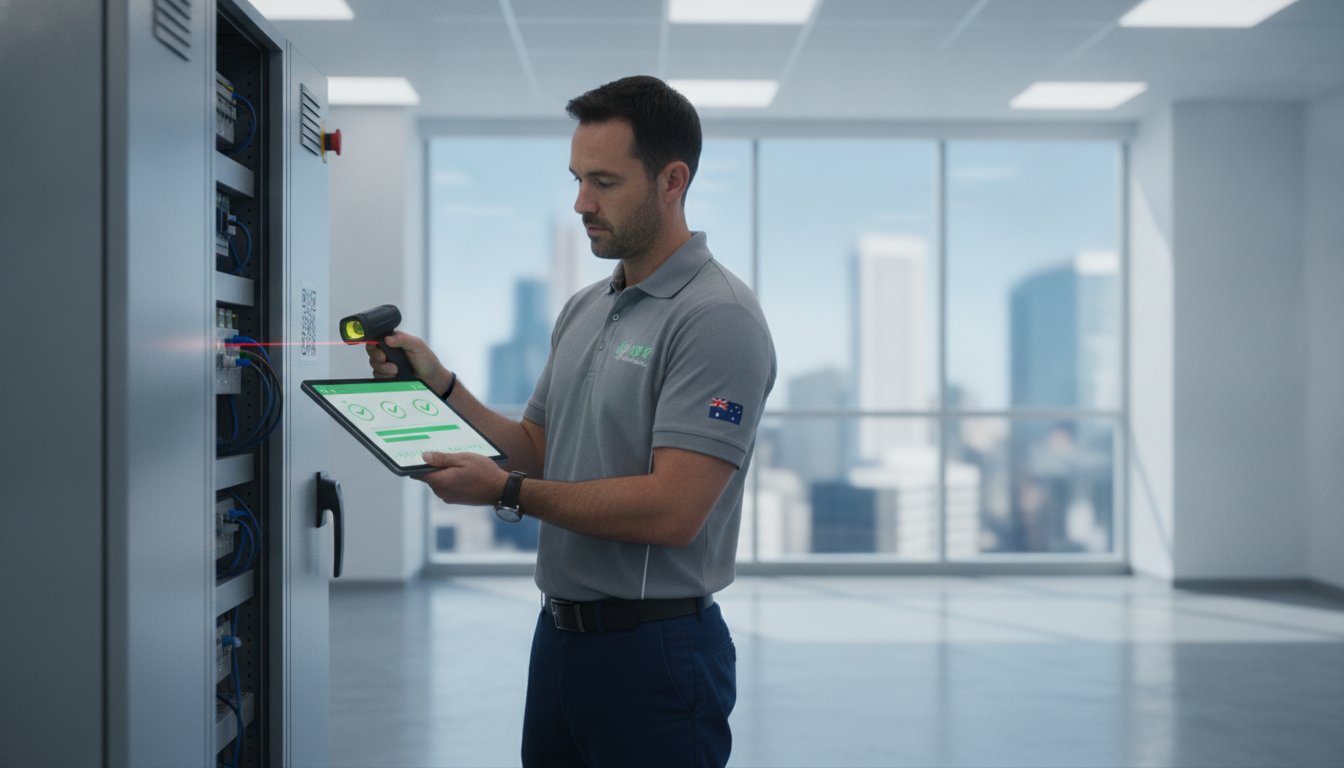
Professional technicians utilise specialised software and mobile devices to build your register in real-time. As each appliance is tested, the technical data is captured instantly, significantly reducing the risk of human error associated with manual tracking or paper-based logs. Receiving a ready-to-use, professional report saves your business dozens of hours that would otherwise be spent building a database from scratch. This systematic data capture provides a level of accuracy that manual spreadsheets simply cannot match, ensuring your records are as reliable as the equipment they track.
The Synergy of Testing and Documentation
Conducting electrical tests without maintaining a formal register is only completing half the compliance journey. A professional register provides the historical context needed to support other specialised requirements, such as rcd testing and emergency light inspections. During the testing cycle, the technician acts as an expert auditor, verifying your asset list against the physical reality of your site. This synergy ensures that your documentation is always a true reflection of your workplace environment, capturing new equipment and identifying items that have been removed from service.
Simplifying the Manager’s Role
For facility and operations managers, the primary benefit of a professionally managed register is the “set and forget” peace of mind it provides. Automated reminders for future testing intervals ensure that compliance never slips through the cracks, regardless of how busy your operational schedule becomes. These comprehensive reports are designed to satisfy OHS/WHS committees and provide the clear, board-level transparency required for modern corporate governance. You can review our services to see how integrated reporting options can simplify your compliance obligations and reduce your daily administrative load.
Maintaining Your Register for Long-Term Safety
An electrical asset register is only as effective as the data it contains. It shouldn’t be viewed as a “one-off” document created during an initial audit. Instead, it requires regular updates to remain a reliable source of truth for your facility. As new equipment is purchased or old items are decommissioned, these changes must be reflected in the register to prevent compliance gaps. This ongoing maintenance ensures that your safety documentation is always ready for a surprise inspection or a formal audit.
Establishing clear procedures for adding new equipment between scheduled testing visits is vital for workplace safety. Many organisations implement a “new asset” protocol where any incoming electrical item is logged and tagged before being put into service. This prevents the accumulation of unrecorded “ghost assets” and ensures that every piece of equipment in the building is accounted for. This proactive approach keeps your data accurate and your staff protected from untested appliances.
Beyond safety, the data within your register serves as a powerful tool for capital expenditure (CapEx) planning. By reviewing the age, testing history, and repair frequency of your electrical assets, you can predict when equipment is likely to reach the end of its functional life. This allows for more accurate budgeting and reduces the likelihood of sudden, unbudgeted replacement costs. Using your register for strategic planning transforms it from a simple compliance list into a valuable business asset.
Best Practices for Ongoing Management
Assigning a single “owner” of the register within your organisation ensures accountability and data consistency. This individual should be responsible for integrating the register with your existing facility management (FM) software to streamline maintenance workflows. It’s also essential that the register reflects the current emergency lighting standards and other relevant Australian codes. Regular reviews, ideally on an annual or biennial basis, help verify that your documentation aligns with the physical reality of your site and any updated safety regulations.
The Value of a Long-Term Compliance Partner
Partnering with a consistent provider is the most reliable way to maintain your register’s integrity over time. A long-term compliance partner understands your site’s specific layout and equipment history, leading to more efficient testing cycles and fewer disruptions. Having a consistent history of results for every asset makes it easier to track performance trends and identify recurring faults in specific equipment types. This proactive relationship transforms safety from a reactive chore into a steady, managed process that supports your business’s long-term order.
To begin building a comprehensive and compliant record for your business, we invite you to arrange a professional site assessment. Our team acts as a dependable partner to help you stay organised, compliant, and focused on safety.
Securing Your Workplace with Professional Compliance Data
Transitioning from manual tracking to a centralised electrical asset register is a strategic move that enhances both safety and operational efficiency. You’ve seen how a structured system eliminates the risks associated with unrecorded assets and fragmented reporting, providing a clear narrative of compliance for auditors and insurers. By leveraging professional testing services, you gain access to specialised expertise in AS/NZS 3760 and AS/NZS 3551 standards without the heavy administrative burden of manual data entry.
Maintaining this record ensures that your facility remains audit-ready through automated due-date reminders and professional compliance reporting included with every service. This proactive approach allows you to focus on your core business operations while we handle the technical details of your safety obligations. It’s a reliable way to protect your team and ensure long-term business order through systematic documentation.
Taking this step today builds a safer, more organised environment for everyone in your workplace.
Frequently Asked Questions
What exactly is an electrical asset register?
An electrical asset register is a centralised digital record that tracks the safety status, location, and technical history of every electrical item in a workplace. It serves as a living document that goes beyond a simple inventory by recording test results, unique asset IDs, and next scheduled test dates. This systematic approach ensures that facility managers have a transparent overview of their entire equipment fleet, facilitating better maintenance and safety management.
Is it a legal requirement to have an electrical asset register in Australia?
While the specific term is not always in the primary legislation, maintaining detailed records of electrical testing is a requirement under Australian WHS laws. Standards such as AS/NZS 3760:2022 and AS/NZS 3551 mandate the documentation of safety inspections and test results. A structured system is the most effective method for a PCBU (Person Conducting a Business or Undertaking) to demonstrate they’ve met their legal duty of care.
What information should be included in a compliant asset register?
A compliant register must include a unique asset ID, often using barcodes, along with a clear description of the item and its specific physical location. It should also record the date of the test, individual results like earth leakage or insulation resistance, and the technician’s details. Crucially, it must state the next scheduled test date and provide a transparent history of any failures or repairs made to the equipment.
How often should my electrical asset register be updated?
Your electrical asset register should be updated every time a new piece of equipment enters the workplace or when scheduled testing occurs. Because testing frequencies vary based on the environment and equipment type, the register acts as a dynamic tool for tracking these different cycles. We always recommend obtaining site-specific professional guidance to determine the appropriate testing intervals for your particular industry and equipment use cases.
Can I use a simple spreadsheet as an asset register?
While a spreadsheet is better than no record at all, it’s prone to human error and lacks the automated features of specialised compliance software. Professional systems integrate with barcoding and provide automated due-date reminders that spreadsheets cannot offer. For businesses with multiple sites or high asset volumes, a digital, professionally managed system provides a far more reliable and secure method for maintaining long-term safety records.
How does an asset register help during a safety audit?
This record provides immediate, searchable proof that your equipment has been tested according to relevant Australian Standards. During a safety audit, being able to produce a comprehensive report with unique IDs and test histories demonstrates a high level of professional organisation and a safety-first culture. It replaces the stress of searching through paper files with a clear digital record that satisfies the scrutiny of regulators and insurance providers.
What is the difference between a test log and an asset register?
A test log is often a simple list of results from a single testing session, whereas a full register is a comprehensive lifecycle record of each item. The system tracks an asset from its initial entry into the workplace through multiple testing cycles until its eventual decommission. It provides a historical overview of performance and repairs, making it a strategic management tool rather than just a one-off record.
Should biomedical equipment be included in the same register?
Biomedical equipment can be included in a centralised system, but it must be managed according to the specific requirements of AS/NZS 3551. This standard requires additional data points, such as risk classifications and clinical-specific test results, which differ from standard office equipment. A professional compliance partner can help you integrate these specialised assets into a unified reporting framework while ensuring all specific clinical safety standards are strictly met.
