Tag and Test FAQ: The Complete Guide to Australian Workplace Safety
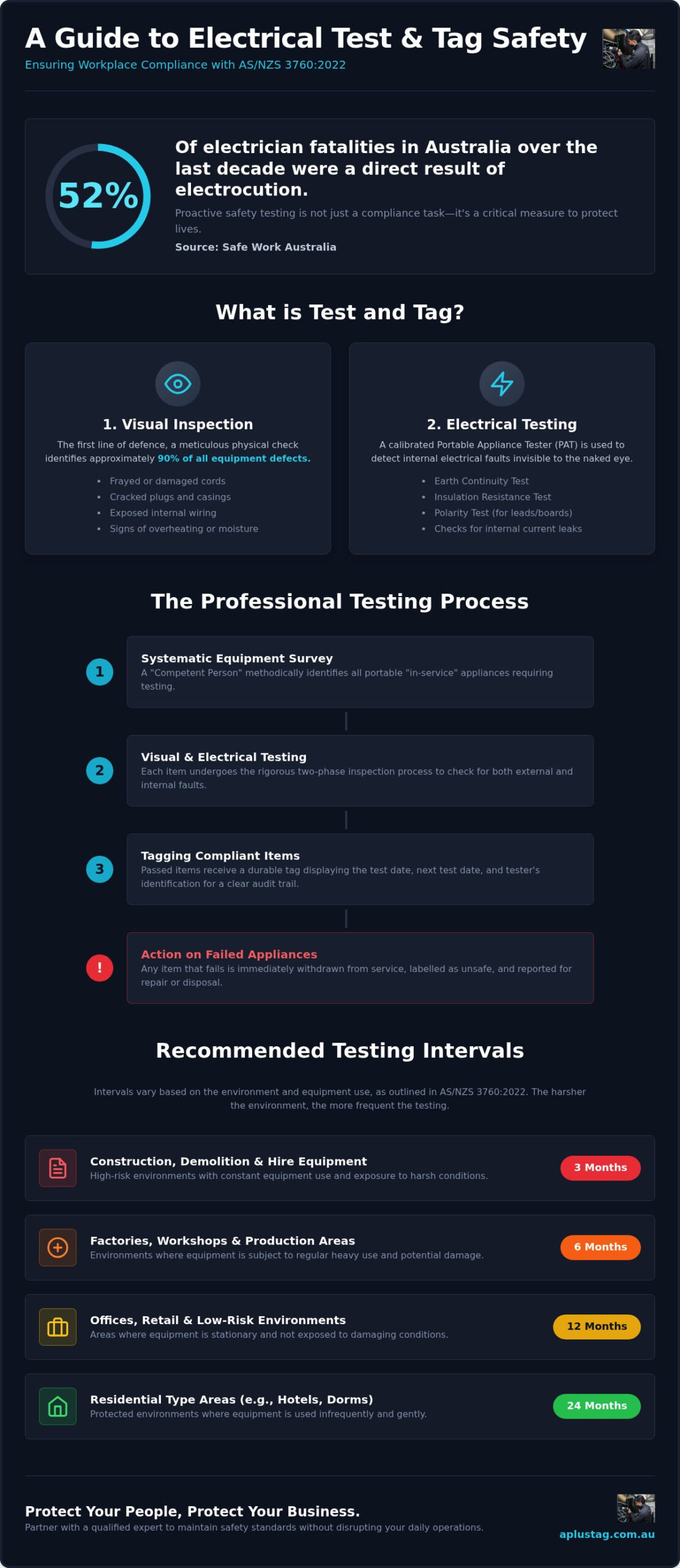
Did you know that 52% of electrician fatalities in Australia over the last decade were the direct result of electrocution? This sobering statistic from Safe Work Australia highlights why electrical safety is far more than just a checkbox exercise. It’s completely natural to feel a sense of unease when managing the technicalities of the AS/NZS 3760:2022 standard or to worry about the potential liability if an accident occurs. Organising a recurring tag and test schedule can feel like a heavy burden when you are trying to keep your daily operations running smoothly.
We’ve developed this guide to provide clear, professional answers to every question you have about your workplace safety obligations. Our goal is to replace that uncertainty with a sense of order and security. You’ll gain a precise understanding of testing intervals, learn how to meet the latest Australian WHS laws, and discover how to streamline your compliance process. We will preview the essential steps for maintaining an accurate asset register and explain the recent shifts toward digital reporting, ensuring your business remains audit-ready and your people stay protected.
Key Takeaways
- Understand the specific requirements of AS/NZS 3760:2022 to ensure your electrical equipment meets the latest national safety benchmarks.
- Learn how a professional tag and test program identifies hidden electrical faults through a combination of visual inspections and calibrated technical testing.
- Identify the correct testing intervals for your workplace, ranging from 3-month to 24-month cycles based on your specific environment and equipment use.
- Discover how detailed asset registers and compliance reporting provide a transparent audit trail and simplify your long-term WHS documentation.
- Recognise the importance of partnering with a qualified expert to maintain safety standards without disrupting your daily business operations.
What is Test and Tag and Why is it Essential?
Electrical safety is a structured process designed to protect lives and property. In Australia, this is commonly achieved through a dual-process safety verification known as portable appliance testing (PAT), or more simply, test and tag. This procedure involves two distinct phases: a thorough visual inspection and a technical electrical test using a calibrated instrument. While the technical testing is vital for finding internal faults, professional experience shows that a meticulous visual inspection identifies approximately 90% of equipment defects. These visible issues often include damaged insulation, frayed cords, or compromised plugs that could lead to catastrophic failure if left unaddressed.
It’s helpful to distinguish between equipment types. This safety standard focuses on “in-service” portable appliances. These are items that plug into a power outlet and can be moved while in use or easily relocated between workstations. This differs from fixed electrical installations, such as hard-wired switchboards or permanent lighting, which fall under different maintenance regulations. By focusing on portable gear, a tag and test program targets the items most susceptible to wear and tear, effectively preventing electric shock and fire hazards before they manifest.
The Core Purpose of Electrical Safety Testing
The primary objective is to reduce workplace accidents by identifying risks before they cause harm. Under Australian WHS laws, every business owner has a “Duty of Care” to provide a safe environment for their team. Proactive monitoring isn’t just about safety; it’s also about risk management. Maintaining a consistent testing schedule helps minimise insurance premiums and reduces liability risks. If an incident occurs, having a documented history of compliance proves that you’ve taken all reasonable steps to ensure equipment safety and operational integrity.
Why Tag and Testing is Non-Negotiable
Choosing to ignore these requirements carries significant weight. Non-compliance can lead to substantial fines, legal action, and severe safety breaches that damage a company’s reputation. Beyond the legalities, a robust tag and test routine protects everyone on your site, including employees, contractors, and visitors. It establishes a culture of professional accountability where safety is a core value rather than an afterthought. By treating electrical maintenance as a systematic cycle, you ensure your workplace remains a secure, well-regulated environment for long-term operations.
How the Tag and Testing Process Works
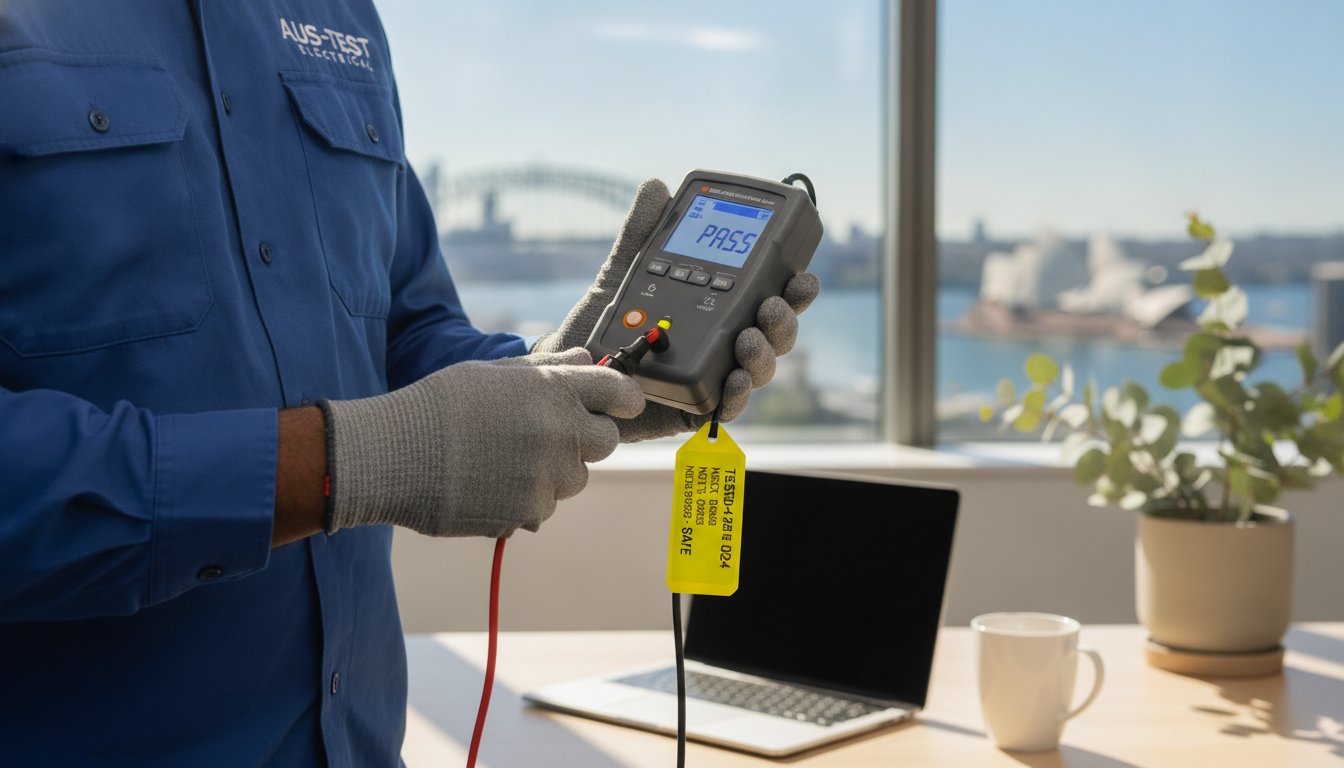
A professional site visit begins with a systematic survey of all electrical equipment. This isn’t a random check; it’s a methodical sweep conducted by a “Competent Person” who possesses the necessary training and skills to interpret test results correctly. A critical tool in this process is the calibrated Portable Appliance Tester (PAT). This device provides precise measurements that a human eye simply cannot detect, ensuring that internal components are functioning safely. Every compliant tag and test procedure concludes with the application of a safety tag. This tag must clearly display the test date, the re-test date, the tester’s name, and the specific test status to provide a transparent record for your safety logs.
Visual Inspection: The First Line of Defence
Before any machinery is connected to the PAT device, it undergoes a rigorous physical check. Technicians look for frayed cords, cracked plug casings, and exposed internal wiring that could pose an immediate threat. They also assess for signs of overheating, such as discolouration on the plastic, and moisture ingress in damp environments. The environment itself is a factor in the assessment; a kettle used in a dusty workshop faces different physical risks than one located in a carpeted office. Identifying these external flaws is the first step in preventing potential workplace fires.
Electrical Testing with a PAT Device
Once the visual check is passed, the appliance is connected to the PAT device for internal verification. Earth continuity testing confirms that the grounding path is intact, which prevents the outer metal casing from becoming live during a fault. Insulation resistance testing checks for internal current leaks that could cause electric shocks, while polarity testing ensures the active and neutral wires are correctly aligned in power boards and extension leads. These technical steps provide the data-driven certainty required to sign off on an item’s safety.
What Happens if an Appliance Fails?
This is a critical stage that requires immediate action to maintain site safety. If an appliance fails any part of the inspection or technical test, it’s immediately withdrawn from service. We apply a highly visible “Danger” or “Failed” tag to ensure no one accidentally plugs the equipment back in. The fault is then reported directly to the site manager or business owner to discuss the next steps. Depending on the defect, the item might be professionally repaired or permanently disposed of to eliminate the risk. Maintaining this level of transparency and immediate response is why many businesses choose to partner with a professional safety testing service to manage their ongoing compliance.
Understanding AS/NZS 3760:2022 Standards
The primary framework for electrical safety in Australia is the AS/NZS 3760:2022 standard. Released on June 8, 2022, this version replaced the older 2010 guidelines to better reflect modern workplace environments and technical advancements. It serves as the national benchmark, ensuring a consistent safety approach across every state and territory. The standard specifically applies to “in-service” electrical equipment, which includes any device already in use and connected to an electrical supply. By adhering to these protocols, businesses create a systematic defence against electrical hazards, moving away from reactive repairs toward a model of structured prevention.
A common point of confusion involves the distinction between “New to Service” and “Recurrent” testing. When you purchase brand-new equipment, it’s generally considered compliant by the manufacturer. However, the standard requires these items to be tagged as “New to Service” before they’re first used. This records the date they entered the workplace and sets the schedule for their first actual tag and test cycle. Recurrent testing then follows at mandated intervals, ensuring that as the equipment ages or moves between different environments, its safety remains verified by a competent person who stays current with these evolving regulations.
Duty of Care and WHS Compliance
Compliance isn’t just about sticking a tag on a cord. It’s about meeting your “Duty of Care” under Australian WHS laws. Regular testing acts as a “safe harbour” during safety audits, providing documented proof that you’ve managed electrical risks effectively. A central requirement here is the maintenance of an accurate asset register. This digital or physical log tracks every item, its test history, and its current status. Legal precedents have repeatedly shown that employers who fail to maintain these systematic records face much higher liability if an electrical accident occurs on their watch.
AS/NZS 3003: Specialised Patient Area Testing
While AS/NZS 3760 covers most commercial settings, medical clinics and healthcare facilities must meet the more rigorous AS/NZS 3003 standards. Standard tag and test procedures are simply insufficient for clinical environments where patients may be vulnerable to even minor electrical leakages. These areas are classified as either body-protected or cardiac-protected, depending on the medical procedures performed. Testing in these zones requires specialised equipment and higher precision to ensure that both the electrical installations and the medical appliances work in perfect, life-saving harmony.
Determining Your Testing Intervals and Colours
Determining the right frequency for your safety checks is a balancing act between operational efficiency and risk mitigation. The AS/NZS 3760:2022 standard doesn’t apply a single rule to every business; instead, it categorises testing intervals based on the equipment’s environment and the likelihood of damage. Equipment in a hostile environment, where it’s subject to heat, moisture, or vibration, requires much more frequent attention than a desktop computer in a climate-controlled office. Setting a structured tag and test schedule ensures that high-use tools are checked before wear becomes a danger.
Managing these recurring cycles is essential for maintaining a safe workplace without interrupting daily operations. If your business uses a mix of office gear and workshop machinery, you’ll likely have overlapping schedules to track. Many professional managers use a digital asset register to receive automated reminders, which prevents any equipment from being missed during a busy quarter. To ensure your business stays ahead of these requirements, you can book a professional compliance audit to establish your baseline schedule.
Testing Frequencies by Environment
The environment dictates the risk level. In construction and demolition, where equipment is exposed to rough handling and the elements, the standard mandates 3-month intervals. Factories, commercial kitchens, and workshops typically follow a 6-month cycle because these areas are considered hostile environments where cords are easily damaged. For low-risk areas like retail shops or corporate offices, the requirements are more relaxed. Static equipment in these settings often only requires testing every 12 months, while some items may extend to a 60-month cycle if they aren’t subject to regular movement or flexing.
The Australian Test Tag Colour System
Australia uses a national colour-coding system to make on-site safety audits fast and visual. While many industries can choose their own internal system, colour coding is strictly mandatory for the construction, mining, and demolition sectors. This system uses four primary colours to represent different quarters of the year: Red (December to February), Green (March to May), Blue (June to August), and Yellow (September to November). For example, as of July 2026, any compliant equipment on a high-risk site must display a Blue tag. This allows site managers to identify at a glance if a contractor’s gear is out of date. Even in industries where it isn’t legally required, adopting this system is a best-practice approach that simplifies long-term documentation and professional accountability.
Choosing a Professional Compliance Partner
While any business can technically purchase a basic testing device, true workplace safety requires a systematic framework that goes beyond a simple pass or fail result. Choosing a professional partner for your tag and test requirements ensures that your business is protected by technical expertise and comprehensive insurance. Uncertified contractors or “DIY” approaches often lack the calibrated equipment and deep understanding of the AS/NZS 3760:2022 standards necessary to survive a rigorous safety audit. A professional service provider acts as a dependable ally, carrying the technical burden so you can focus on your core business operations with total peace of mind.
The real value of a professional partnership lies in the documentation. In an era where regulatory bodies across Australia are increasingly moving toward digital-only reporting, having a paperless trail is essential. A professional compliance partner provides detailed asset registers and compliance reports that act as a “safe harbour” during inspections. These records don’t just list what was tested; they provide a transparent history of every appliance, allowing you to track equipment lifecycles and stay ahead of your next scheduled maintenance cycle without any administrative friction. Before engaging any provider, it’s worth understanding the test and tag cost structures Australian businesses can expect in 2026, so you can evaluate quotes with confidence and avoid hidden fees.
Beyond Tagging: Holistic Electrical Safety
A methodical approach to safety looks at the entire electrical ecosystem, not just the cords on the floor. RCD (Safety Switch) testing is the perfect companion to a tag and test programme, as it ensures the circuit will actually trip in the event of a fault. For a truly proactive strategy, specialised switchboard thermal imaging identifies invisible fire risks by detecting heat signatures before a component fails. Integrating these services with emergency and exit light testing creates a comprehensive safety net, ensuring that your evacuation routes are clear and your infrastructure is resilient against hidden electrical faults.
The A Plus Compliance Services Approach to Workplace Compliance
We believe that safety should be a seamless part of your business, not a disruption to it. Our approach is grounded in a methodical, professional service that respects your operational rhythm. By specialising in high-precision testing and providing comprehensive asset registers, we ensure you are always audit-ready. We prioritise punctuality and responsiveness, acting as a knowledgeable expert that simplifies complex WHS requirements. Our commitment to national safety standards and long-term partnerships means you’ll never have to worry about a missed deadline or a technical oversight. We provide the systematic management required to maintain a secure, well-regulated workplace for the long term.
Streamlining Your Long-Term Compliance Strategy
Maintaining a safe workplace is a continuous commitment that requires a systematic approach. By understanding the specific intervals required for your environment and adhering to the AS/NZS 3760:2022 standards, you’ve already taken the most important step toward risk mitigation. Professional documentation through a detailed asset register is your best defence during a safety audit. It transforms safety from a source of stress into a transparent, well-regulated part of your business operations.
Transitioning to a professional tag and test schedule doesn’t have to be complex or disruptive. When you integrate these regular checks with advanced techniques like specialised switchboard thermal imaging, you address both visible and hidden hazards before they escalate. We act as your dependable partner, providing national service coverage and AS/NZS 3760 compliant reporting that keeps your team protected.
Secure your workplace with professional tag and test services from A Plus Compliance.
You’re now equipped with the knowledge to manage your electrical safety with confidence. With the right systems in place, you can focus on your core business goals while we ensure your compliance remains impeccable and your workplace stays secure.
Frequently Asked Questions
What is the difference between testing and tagging?
Testing refers to the technical verification of an electrical appliance to ensure it functions safely without internal faults. Tagging is the physical application of a durable label that records the test results, the date of inspection, and the technician’s details. Together, these steps provide a visible and documented safety record for every piece of equipment in your workplace.
Is tag and test mandatory for my small office?
Yes, electrical safety is a requirement for all Australian workplaces under national WHS “Duty of Care” laws. While a small office is generally a low-risk environment, you’re still legally responsible for the safety of your staff and visitors. A regular tag and test schedule ensures you meet these obligations and provides a clear safety trail for insurance and audit purposes.
How often do I need to get my electrical equipment tested?
Testing intervals are determined by the risk level of your specific environment as outlined in AS/NZS 3760:2022. High-risk sites like construction zones require 3-month cycles, while factories usually follow a 6-month schedule. Most standard office equipment is tested every 12 or 24 months, depending on whether the gear is subject to regular movement or flexing.
What items are considered “portable” and need a tag?
Portable items include any electrical equipment that connects to a power supply via a flexible cord and plug. This category covers common workplace tools like laptops, kettles, printers, power boards, and extension leads. If the item can be easily moved between power outlets or is designed to be held while in use, it requires regular safety verification.
Do brand new electrical items need to be tested and tagged immediately?
Brand new items don’t require an immediate technical test, but they must be tagged as “New to Service” before they’re first used. This tag records when the item entered the workplace and establishes its first scheduled test date. Once that initial interval passes, the item must undergo a full technical tag and test procedure to remain compliant.
What happens if an item fails its safety test?
If an appliance fails, it’s immediately removed from use and marked with a highly visible “Danger” or “Failed” tag. You must ensure the equipment is stored securely so no one can accidentally plug it back in. From there, you can choose to have the item professionally repaired or permanently disposed of to eliminate the safety risk.
How long must I keep my tag and test records?
You should maintain your electrical safety records until the equipment is either re-tested or permanently removed from service. Many Australian businesses choose to keep these records for seven years to align with broader WHS and tax documentation requirements. Using a digital asset register ensures these logs are easily accessible and protected against physical damage.
Can any electrician perform tag and testing?
Testing must be performed by a “Competent Person” who has the specific training, knowledge, and calibrated equipment required by Australian standards. While many electricians provide this service, specialised safety technicians often offer more detailed compliance reporting and asset management. It’s vital to confirm your provider is fully insured and up-to-date with the AS/NZS 3760:2022 regulations.
