
Victorian Fire Extinguisher Inspection Standards
Portable fire extinguisher inspection standards help Victorian businesses understand how extinguisher selection, location and maintenance should be managed. The right approach depends on the equipment, the workplace and the applicable requirements, so a generic calendar reminder is not enough to establish the right process for every site.
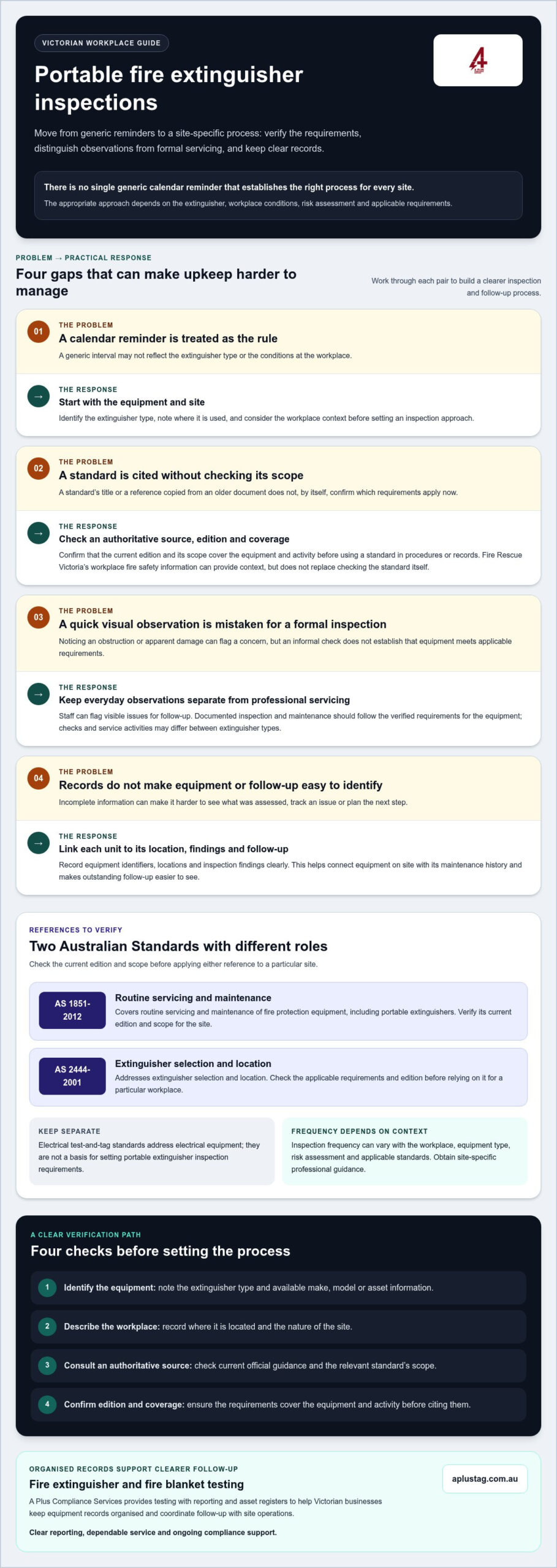
AS 1851-2012 covers routine servicing and maintenance of fire protection equipment, including portable extinguishers, while AS 2444-2001 addresses extinguisher selection and location. Inspection frequency can depend on extinguisher type, workplace conditions, risk assessment and relevant requirements. Verify the current standard and its scope before applying it to a particular site.
This guide explains how to check which requirements are relevant, what information to record and how to organise follow-up. It also distinguishes routine observations from professional inspection and servicing. A Plus Compliance Services provides fire extinguisher and fire blanket testing as part of workplace compliance support, with reporting and asset registers to help Victorian businesses keep equipment records organised.
Key Takeaways
- Portable fire extinguisher inspection standards help guide equipment maintenance, but the appropriate process depends on the site and equipment.
- Identify the extinguisher type and workplace context, then verify the applicable standard and current edition using an authoritative source.
- Record equipment identifiers, locations and findings clearly so inspection activity and follow-up are easier to manage.
- Plan inspection activity around site operations and use site-specific professional guidance rather than assuming one interval suits every workplace.
- A Plus Compliance Services provides fire extinguisher and fire blanket testing, with reporting and asset registers to support organised follow-up.
What portable fire extinguisher inspection standards mean for Victorian workplaces
An inspection standard is a documented reference for how particular equipment is selected, checked or maintained. For portable fire extinguishers, it helps clarify what an inspection or maintenance process should address and what records can support ongoing management. The requirements depend on the equipment and workplace context, so a general description cannot establish the process for every site.
Condition and access matter in day-to-day operations. An obstructed extinguisher may be difficult to reach, while incomplete records can make it harder to identify what was inspected, track an outstanding issue or plan follow-up. Consistent documentation links equipment on site with its maintenance history.
What does a portable extinguisher inspection cover?
Broadly, an inspection considers the extinguisher’s condition and available maintenance information. The exact checks and service activities depend on applicable requirements, which should be verified against current authoritative guidance. A general explanation can describe an inspection’s purpose, but it should not be treated as a prescribed checklist.
Staff may notice an obvious issue during a routine observation, such as equipment being blocked or appearing damaged. That observation can flag a concern, but it is not the same as a documented professional inspection or service. An informal visual check alone does not establish that the equipment meets applicable requirements.
A documented inspection creates a clearer record of what was assessed and whether follow-up is needed. Workplace procedures should distinguish day-to-day observations from formal inspection and maintenance, which should follow verified requirements for the equipment. Do not assume that every extinguisher uses the same checks or maintenance process.
Why workplace context matters in Victoria
The equipment and its environment shape which guidance needs to be checked. An office, school and warehouse can have different layouts, activities and operational considerations. These differences may affect which extinguisher is appropriate, where it is located and what site-specific risks inform the maintenance approach. Examples are not a substitute for assessing the actual workplace.
For a Victorian site, identify the extinguisher type and where it is used, consider the workplace context, then verify the applicable requirements through an authoritative source. Requirements and inspection frequency can vary with the workplace, equipment type, risk assessment and applicable standards. Obtain site-specific professional guidance rather than relying on one interval or a generic online checklist.
A Plus Compliance Services provides fire extinguisher and fire blanket testing as part of workplace compliance support. Clear inspection records can help site teams coordinate maintenance with normal operations and keep follow-up visible.
How to verify the Australian standard and inspection requirements
Before setting an inspection schedule, confirm which requirements apply to the equipment and workplace. A standard’s title alone is not enough: check its scope, whether it covers the extinguisher in question and whether the edition you are relying on is current. This helps ensure the guidance is relevant to the site rather than a general rule applied by default.
Verify standard applicability for each context. Equipment type, workplace conditions and current requirements can affect which inspection and maintenance guidance is relevant.
How to check which standard applies
Use a short, documented verification process before citing a standard or using it to create a maintenance schedule:
- Identify the equipment. Record the extinguisher type and any available make, model or asset information so it can be distinguished from other units.
- Describe the workplace context. Note where the extinguisher is located and the nature of the site, such as an office, school or warehouse.
- Consult an authoritative source. Check current official guidance and the relevant Australian Standard’s scope. For building fire safety context, Fire Rescue Victoria’s information on Victorian fire safety regulations for workplaces is a useful reference point, but it does not replace checking the standard itself.
- Confirm the edition and coverage. Verify that the edition is current and its requirements cover the equipment and activity before citing it in procedures or records.
AS 1851 is a reference to investigate for routine servicing and maintenance of fire protection equipment, including portable extinguishers. Before applying it to a particular site, confirm its scope and current edition using an authoritative source. Apply the same care when citing any other standard. A reference copied from an older document may not establish which requirements apply now.
Keep fire equipment guidance separate from electrical safety testing. Electrical test-and-tag standards address electrical equipment and are not a basis for setting portable extinguisher inspection requirements. Combining the two in one schedule without distinguishing their sources can make responsibilities and records unclear.
Why inspection frequency is not one-size-fits-all
Do not assume a single interval applies to every extinguisher and workplace. Frequency can vary with the workplace, equipment type, risk assessment and applicable standards. A schedule copied from another site may not reflect the equipment or conditions at your premises.
If the appropriate interval is unclear, seek site-specific professional guidance before setting or changing the schedule. Record the source used, the relevant edition and the reasoning for the chosen approach. This gives the team a traceable basis for future reviews, particularly when equipment or workplace conditions change.
For Victorian businesses, a careful verification process keeps maintenance planning grounded in relevant guidance. A Plus Compliance Services provides fire extinguisher and fire blanket testing, with reporting and asset registers to help track equipment and follow-up.
What to examine and record during portable extinguisher inspections
Useful inspection records connect each extinguisher to its location, assessment and any follow-up. The precise observations and documentation depend on applicable requirements, so verify them against current authoritative guidance before creating a checklist. A general list of things to look at should not be presented as a prescribed inspection procedure.
A visual observation can help a workplace team notice an apparent issue, but it does not prove that an extinguisher complies with applicable requirements or is ready for use. Keep routine observations distinct from documented professional inspection and testing, and record who needs to assess or action a concern.
Inspection observations to document
Before specifying checks, confirm which condition observations are required for the extinguisher and inspection type. Record relevant findings in plain language and link each note to the individual unit. Describe the observed issue and its location rather than using a broad note such as “fire equipment problem”. Specific wording helps the responsible person identify what needs follow-up.
Do not record a visual observation as a pass or compliance outcome unless that conclusion is supported by the applicable inspection process. If an issue is observed, note that follow-up is needed and keep it visible until addressed. The appropriate action and assessment should follow verified requirements, not assumptions based on appearance alone.
Building useful fire equipment records
An asset register gives teams a consistent place to track each extinguisher and its history. Choose fields that suit the site and applicable recordkeeping requirements. Depending on the workplace, useful information may include an asset identifier, location, equipment description, inspection date, findings and follow-up status. Confirm which details are required before treating these as a formal recordkeeping checklist.
Use a consistent identifier and location description. For example, “FE-01, ground-floor reception” is easier to distinguish from an entry that only says “lobby extinguisher”. If a unit moves, update its location so the register continues to guide staff to the right equipment.
A simple illustrative entry could be organised like this:
- Asset identifier: [site identifier]
- Location: [building area]
- Inspection date: [date recorded]
- Finding: [specific observation, or no observation recorded]
- Follow-up: [action owner and status]
These are example fields, not a claim that they satisfy every workplace’s formal requirements. Align the register with verified guidance and the organisation’s recordkeeping process. Keep findings and follow-up notes specific, then update the status when action is completed so unresolved items remain visible.
Portable fire extinguisher inspection standards inform what should be assessed and recorded, but the applicable details must be verified for the equipment and site. An organised asset register can help managers review locations, track inspection activity and coordinate follow-up with normal operations. A Plus Compliance Services provides fire extinguisher and fire blanket testing, supported by compliance reporting and asset registers to help Victorian workplaces keep equipment records organised.
How Victorian businesses can organise inspections and follow-up
A reliable inspection programme starts with knowing what equipment is on site, where it is located and what records already exist. Facility and operations managers can then coordinate inspection activity, seek site-specific guidance and ensure findings have a clear path to follow-up. This structure helps keep fire equipment tasks visible alongside normal site responsibilities.
Preparing a workplace inspection programme
Before arranging site work, compile an inventory of portable extinguishers and their locations. Gather existing inspection and maintenance records, asset information and any unresolved observations. This can highlight missing or inconsistent details early, rather than leaving the team to reconstruct equipment history during a site visit.
For a Melbourne office, a location list might identify units by floor and area. A warehouse team may find it more useful to group units by building zone or operational area. Choose a format that works for the people managing access and records at that site, without adding unnecessary administration.
Plan access with the people responsible for the relevant areas. Coordinate inspection work around staff, visitors, deliveries and other site activities, and identify any access arrangements that need to be managed. For organisations with several Victorian sites, keep a separate location and record set for each premises. Use consistent asset identifiers and reporting fields where practical.
Use verified requirements and workplace context to guide the programme. Applicable portable fire extinguisher inspection standards and frequency can depend on equipment type, site conditions, risk assessment and relevant standards. If the right approach is unclear, obtain site-specific professional guidance rather than adopting a schedule simply because it is used elsewhere.
Managing findings and future due dates
After inspection activity, link each finding to the relevant extinguisher and location. Assign an action owner, note the next step and keep the item visible in the register until its status is updated. This does not set a universal deadline for resolving findings. Timing should follow applicable requirements and the issue’s context.
Keep the record trail clear. A useful follow-up entry distinguishes between an observation, an assigned action and an action recorded as complete. This helps a manager see what remains open without treating an initial visual note as proof that the equipment has passed an inspection or is ready for use.
Scheduled maintenance and due-date reminders can support a recurring programme by prompting review before an activity is due. Base reminders on verified schedules, then review them when equipment, site use or relevant guidance changes. A Plus Compliance Services provides fire extinguisher and fire blanket testing, with compliance reporting and asset registers to help Victorian businesses coordinate records and follow-up.
Arrange portable fire extinguisher testing and organised reporting
To arrange testing, bring together information about the equipment on site, how the workplace operates and which inspection or maintenance records are available. This gives the process a clear starting point and helps keep the resulting information useful to the people managing the site. Requirements and inspection frequency can vary by workplace, equipment type, risk assessment and relevant standards, so use site-specific professional guidance when planning a recurring schedule.
What to have ready when arranging testing
Before booking site activity, prepare a practical overview of the equipment and premises. A location list and existing records can help establish the scope and identify information that may need attention.
- Equipment locations: Note where extinguishers are positioned, using building areas or other descriptions staff can recognise.
- Available equipment information: Gather existing asset identifiers and any available details that distinguish one unit from another.
- Inspection and maintenance records: Collect current records, including findings or actions that remain open.
- Site access needs: Explain operational considerations, such as areas with restricted access or times when work needs to be coordinated with staff and visitors.
This preparation helps A Plus Compliance Services understand the equipment scope and plan fire extinguisher and fire blanket testing around the workplace. For a Melbourne office, that might mean coordinating access to separate floors; at a warehouse, it could involve identifying operating areas and access arrangements. The practical details depend on the site.
How reporting supports ongoing workplace organisation
Testing is one part of an ongoing compliance programme. Clear reporting and an asset register can keep equipment information, relevant dates and follow-up actions together. Consistent records make it easier for a manager to see which units were included, review documented findings and track actions that still need attention. They also provide a more organised basis for planning future maintenance.
Use the report and register as working records, not just documents to file away. Keep equipment identification and location details consistent, and make sure follow-up status is clear to the people managing the site. Where a finding needs action, the record should make the next step visible without implying that an observation alone confirms compliance or readiness.
Set future reminders using applicable requirements and site-specific guidance, then review the schedule if equipment or workplace conditions change. Portable fire extinguisher inspection standards should be applied in context, not converted into a generic interval for every site. A Plus Compliance Services supports Victorian workplaces with fire extinguisher and fire blanket testing, compliance reporting and asset registers to help keep maintenance information organised.
Make your next compliance step site-specific
Use current equipment information and records as the starting point for a practical plan. Confirm the requirements relevant to your premises, then set up a process that keeps future inspection activity, findings and follow-up visible. A schedule should reflect the equipment and workplace, not simply repeat an interval used at another site.
Portable fire extinguisher inspection standards are most useful when translated into clear, manageable actions for the people responsible for the workplace. A site-specific discussion can help clarify which equipment is in scope and how testing and reporting can fit your operations.
A steady, organised approach can make ongoing safety responsibilities easier to manage. A Plus Compliance Services provides fire extinguisher and fire blanket testing, along with compliance reporting and asset registers to support workplace organisation.
Frequently Asked Questions
What is the difference between a routine extinguisher check and a professional inspection?
A routine check is an informal observation that may help staff notice a visible concern. A professional inspection follows the applicable maintenance process and is documented. For example, a staff member might report that an extinguisher is difficult to reach, but that observation does not establish its maintenance status. Keep workplace observations and formal inspection records distinct so concerns can be referred for appropriate assessment and follow-up.
How often should portable fire extinguishers be inspected in a Victorian workplace?
There is no single interval to assume for every Victorian workplace. The appropriate frequency depends on the extinguisher, workplace conditions, risk assessment and applicable requirements. Do not copy a schedule from another site or apply electrical equipment testing intervals to extinguishers. Check current authoritative guidance and obtain site-specific professional advice to establish a suitable schedule for the equipment and premises.
Which Australian Standard applies to portable fire extinguisher inspections?
AS 1851-2012 is the standard to check for routine servicing and maintenance of fire protection equipment, including portable extinguishers. AS 2444-2001 covers selection and location, which is a different subject. Verify the current edition and relevant scope against an authoritative source before relying on either reference. The portable fire extinguisher inspection standards relevant to a particular site depend on the equipment and context.
What information should a workplace fire extinguisher register include?
A useful register should let someone distinguish each extinguisher and understand its record history. Alongside an asset identifier and location, consider recording the equipment description, inspection or service date, documented finding, action owner and follow-up status. If a unit is moved or replaced, update the entry so staff are not relying on outdated location information. Check the record fields against requirements that apply to your premises.
Can extinguisher inspections be coordinated across multiple Melbourne sites?
Yes. A coordinated programme can use consistent record fields while keeping each premises’ equipment and findings identifiable. This can support sites in Melbourne, St Kilda, Caulfield, Oakleigh, Clayton, Springvale, Mulgrave, Dandenong, Berwick, Mount Waverley, Cranbourne, Bayswater, Notting Hill, Scoresby, Officer, Pakenham and Keysborough. Prepare a separate location list and available records for each site, then plan access with the relevant site contacts.
What should a workplace do when an extinguisher has a recorded issue?
Keep the issue visible in the workplace’s follow-up process and link it to the correct extinguisher and location. Notify the person responsible for site safety or facilities, record who will coordinate the next action and update the entry as the matter progresses. Seek an appropriate assessment rather than treating a visual note as a technical conclusion. Follow applicable requirements and site procedures when deciding what action is needed.
Can fire extinguisher testing be scheduled around normal workplace operations?
Testing can be planned with site operations in mind. Share access arrangements and activities that affect the areas where equipment is located, such as deliveries, visitor movement or scheduled work. A site contact can help coordinate access and communicate the planned activity to relevant teams. For workplaces operating across multiple areas, grouping locations into a clear access plan can help staff prepare and manage disruption.
