Thermal Imaging Guide for Australian Workplaces
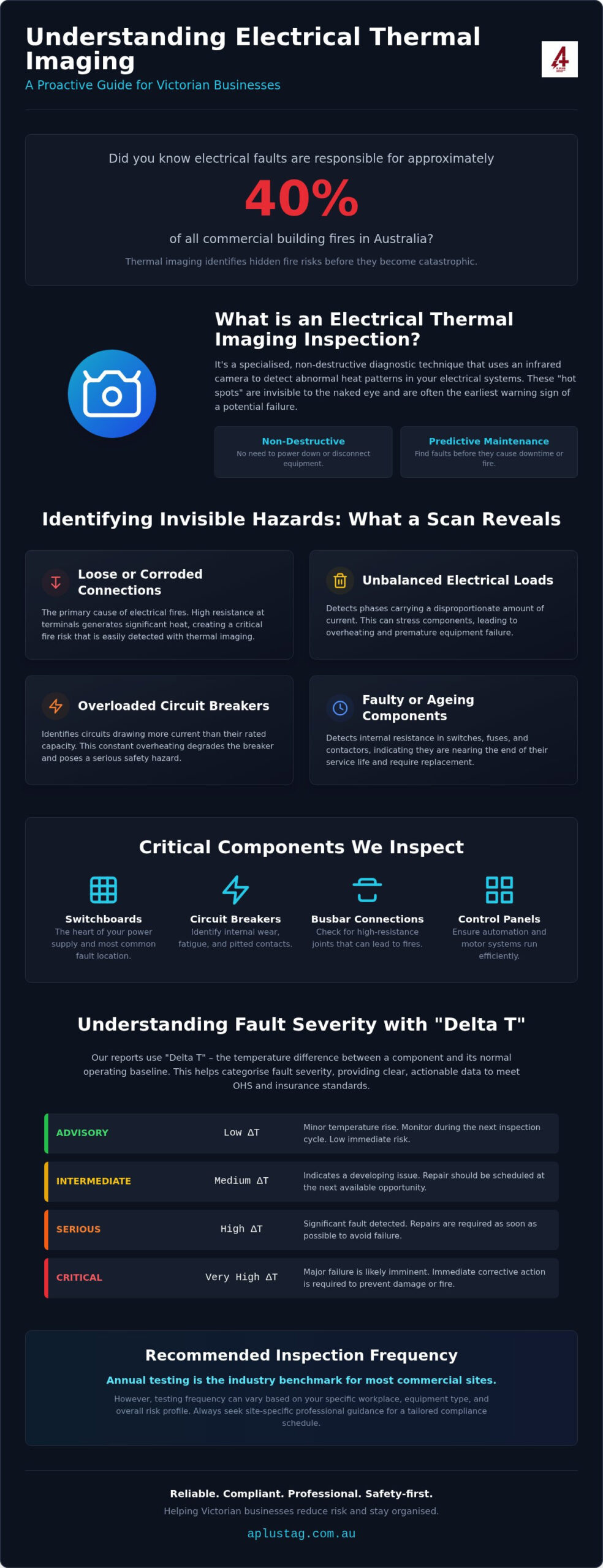
Did you know that electrical faults are responsible for approximately 40% of all commercial building fires in Australia? It’s a sobering figure for any facility manager or business owner in Victoria. You likely already stay on top of your regular test and tag cycles, yet the fear of a hidden switchboard failure causing a midnight blaze or a costly midday shutdown remains. You might find yourself wondering, what does a thermal imaging inspection show that my standard visual checks miss?
We understand that managing multiple safety testing schedules is complex and can feel overwhelming. This guide is designed to simplify the process, showing you how specialised infrared technology identifies “unseen” thermal anomalies before they lead to equipment failure. We’ll explore how these inspections help you meet OHS obligations, satisfy insurance requirements, and provide clear, actionable reports for your records. By the end of this article, you’ll have a practical roadmap for maintaining a safer, more organised workplace with minimal risk of electrical failure.
Key Takeaways
- Learn why thermal imaging is a vital, non-destructive tool for identifying “invisible” electrical hazards before they lead to costly downtime or workplace fires.
- Understand what does a thermal imaging inspection show, from loose switchboard connections to unbalanced electrical loads that standard visual checks often miss.
- Discover how “Delta T” measurements help categorise fault severity, providing you with clear, actionable reports to satisfy Victorian OHS standards and insurance requirements.
- See how integrating thermal scans into your regular maintenance schedule helps Victorian businesses reduce risk and stay organised without disrupting daily operations.
- Find out why annual testing is the industry benchmark for commercial sites and how to obtain site-specific advice tailored to your facility’s risk profile.
What is a Thermal Imaging Inspection for Electrical Systems?
Thermography is a specialised diagnostic technique used to detect heat patterns and temperature variations across electrical components. In an industrial or commercial context, it’s a non-contact and non-destructive method that allows technicians to identify potential faults without touching or disconnecting equipment. By using high-resolution infrared cameras, we convert infrared energy into a visible light spectrum known as a thermogram. This visual map highlights “hot spots” that are invisible to the naked eye, allowing us to pinpoint issues before they escalate.
When business owners ask, “what does a thermal imaging inspection show?” the answer lies in the detection of heat before it leads to a catastrophic failure. Unlike building scans that look for water leaks or insulation gaps, an electrical thermal scan focuses specifically on the integrity of your power distribution system. Crucially, these inspections are performed while your equipment is live and operating under its normal load. This ensures that the data collected reflects real-world conditions. Understanding exactly what does a thermal imaging inspection show helps you move from guessing about your switchboard’s condition to having documented proof of its safety.
The Role of Infrared Thermography in Maintenance
Moving from reactive to predictive maintenance is the most effective way to manage workplace safety and reduce the risk of fire. Standard visual inspections often fail to identify internal component stress because many faults occur deep within switchboard assemblies. If you wait for a fuse to blow or a circuit to trip, you’re already dealing with costly downtime. Thermal imaging allows us to see through the enclosure’s thermal signature to detect loose connections or failing components early. This proactive approach should be read in conjunction with AS/NZS 3760:2010 as a whole, particularly clause 2.1, to ensure a comprehensive electrical safety strategy for your Victorian business.
Key Components Inspected During a Site Visit
A Plus Compliance Services conducts systematic reviews of your entire electrical infrastructure to identify thermal anomalies. During a typical site visit, our technicians focus on several critical points where heat issues often develop:
- Main Switchboards (MSBs) and Distribution Boards: These are the heart of your facility’s power supply and the most common site for thermal faults.
- Circuit Breakers and Contactors: We identify internal wear, mechanical fatigue, or pitted contacts that generate excess heat.
- Busbar Connections: Technicians check for high-resistance joints that could lead to electrical fires if left unaddressed.
- Control Panels and Motor Control Centres (MCCs): We ensure automation systems and motor starters are running cool and efficiently.
Identifying Invisible Hazards: What the Scan Actually Reveals
A visual inspection of a switchboard only tells part of the story. While a panel might look clean on the outside, internal temperatures can reveal a different tale. When considering what does a thermal imaging inspection show, it’s helpful to think of it as a diagnostic health check for your electrical infrastructure. By identifying heat signatures that exceed normal operating parameters, we can detect several critical hazards before they result in a fire or system failure. This information must be read in conjunction with AS/NZS 3760:2010 as a whole, and particularly clause 2.1, when assessing your broader electrical safety requirements.
- Loose or corroded connections: This remains the primary cause of electrical fires in Victorian workplaces. High resistance at a terminal generates heat that is easily picked up by infrared cameras.
- Unbalanced electrical loads: We identify phases that are carrying a disproportionate amount of current, which can lead to premature component failure.
- Overloaded circuit breakers: Detecting heat generated by demand that exceeds the breaker’s rated capacity.
- Faulty or aging components: Identifying internal resistance in switches, fuses, and contactors that suggests they are nearing the end of their service life.
Loose Connections and High Resistance
Electrical systems are subject to constant thermal expansion and contraction as they heat up and cool down during daily use. Over time, this cycle, combined with subtle building vibrations, can loosen bolts and terminations. This creates a high-resistance path where electricity struggles to flow, generating intense heat. On a thermal camera, this appears as a distinct “hot spot” signature. A single wire might appear to be glowing compared to its neighbours. If left unaddressed, these points can lead to arcing, where electricity jumps across gaps, often resulting in a complete switchboard failure or a fire. To ensure these risks are managed by qualified professionals, we align our practices with the standards set by the Australian Institute for Non-Destructive Testing.
Phase Imbalance and Overloaded Circuits
In three-phase systems, power should ideally be distributed evenly across all three lines. When one phase is forced to carry significantly more current than the others, it overheats. This imbalance stresses the entire system and significantly reduces the lifespan of electrical insulation. Thermal imaging allows us to see these “hot” cables long before the insulation melts or a short-circuit occurs. This is another example of what does a thermal imaging inspection show: the subtle stresses that lead to major failures. By identifying these imbalances early, you can redistribute the load and protect your assets. This proactive approach is a core part of how A Plus Compliance Services helps Victorian businesses reduce risk and stay organised. If you are concerned about the hidden state of your switchboards, you can speak with our team about a professional assessment.
Deciphering the Thermal Report: Temperature Deltas and Risk
Receiving a set of colourful infrared images is only the first step in the safety process. To truly understand what does a thermal imaging inspection show in a practical sense, you need to look at the ‘Delta T’ (ΔT) values. This technical term refers to the temperature difference between a suspect component and a reference component, such as a similar phase under the same load. By measuring this variance, we can accurately assess the level of risk to your facility and prioritise repairs based on urgency.
Professional thermographers rely on established engineering principles, often referencing materials like the IEEE guide on thermography, to ensure that temperature assessments are consistent and technically sound. A Plus Compliance Services provides clear, professional reports that pair every thermal image with a standard digital photograph. This allows facility managers to see exactly which component requires attention, removing any guesswork during maintenance and ensuring your site remains compliant.
Understanding Severity Ratings for Electrical Faults
We categorise findings into specific severity levels to help you manage your maintenance budget and schedule effectively. A structured report identifies where you need to act immediately and where you can simply monitor a situation:
- Minor issues (1–10°C rise): These represent early-stage anomalies. We recommend monitoring these during your next scheduled maintenance cycle to ensure they don’t escalate.
- Intermediate risks (10–35°C rise): These indicate a significant fault that is actively generating heat. You should plan for a repair within a defined timeframe to avoid further degradation.
- Critical faults (>35°C rise): These are high-risk situations where fire or component failure is imminent. Immediate action is required to ensure site safety and prevent downtime.
What a Professional Asset Register Includes
A comprehensive report is more than just a list of faults. It serves as a vital record for insurance and OHS audit readiness. Our documentation includes a detailed inventory of all switchboards and components scanned, creating a clear asset register for your site. This allows for historical data tracking, helping you identify recurring issues or aging infrastructure over time. By maintaining these records, you gain a clear picture of what does a thermal imaging inspection show across multiple years of service. This documentation should be read in conjunction with AS/NZS 3760:2010 as a whole, and particularly clause 2.1, when managing your broader electrical safety schedule. Helping Victorian businesses reduce risk and stay organised is at the heart of our reporting process.
Why Victorian Workplaces Prioritise Thermographic Testing
In Victoria, workplace safety is governed by a strict legal framework that requires employers to provide and maintain a safe working environment. Under the Occupational Health and Safety Act 2004, businesses have a Duty of Care to manage risks associated with electrical installations. Many facility managers ask, “what does a thermal imaging inspection show that helps with my legal standing?” The answer lies in the documented evidence of proactive risk management. By identifying potential hazards before they escalate into a fire or an unplanned outage, you demonstrate a clear commitment to a safety-first workplace.
Fire prevention is a primary concern for Melbourne warehouses, offices, and healthcare facilities. An electrical blaze can cause catastrophic property damage and put lives at risk. Beyond the physical danger, the operational impact of a sudden power failure can halt production or services for days. Thermographic testing acts as an early warning system, ensuring your business remains compliant and functional while helping Victorian businesses reduce risk and stay organised.
Insurance Requirements and Risk Mitigation
Many commercial property insurers in Australia now mandate annual thermal imaging reports as a condition of policy renewal. Providing a professional thermal imaging certificate can assist in maintaining coverage or may even help in negotiating lower premiums by proving you are actively mitigating fire risks. These reports are essential during fire safety audits, offering clear “proof of maintenance” to stakeholders and shareholders. It shows that your organisation is proactive, making workplace compliance easier to manage and ensuring you meet the expectations of your insurance provider.
Minimising Disruption to Site Operations
One of the greatest benefits for busy aged-care, hospitality, and industrial venues is that thermal scanning requires zero downtime. In fact, “business as usual” is actually better for the scan. Because what does a thermal imaging inspection show is dependent on electrical load, we prefer to test when your systems are under their typical peak demand. This allows A Plus Compliance Services to work around your site operations in Melbourne with minimal disruption. We provide clear reporting and dependable service to ensure your facility remains safe without interrupting your daily routine.
Our methodical approach ensures that every distribution board is checked without needing to switch off the power. This service should be read in conjunction with AS/NZS 3760:2010 as a whole, and particularly clause 2.1, to ensure your total compliance strategy is robust and professionally managed.
Request a professional thermal imaging assessment for your site
Integrating Thermal Imaging into Your Maintenance Schedule
A successful electrical safety program involves more than just checking boxes. It requires a systematic approach that bridges the gap between portable equipment and your fixed infrastructure. While standard testing covers what you can touch, what does a thermal imaging inspection show provides the missing piece by revealing the hidden health of your switchboards. Coordinating these services ensures that every part of your electrical system is accounted for, from the smallest appliance to the main distribution board.
Managing multiple safety testing schedules can be complex for facility managers. At A Plus Compliance Services, we focus on making workplace compliance easier to manage by offering a streamlined approach. Coordinating your RCD testing, emergency and exit light testing, and specialised thermal scans into a single maintenance cycle reduces site visits and minimises disruption to your daily operations. This methodical integration helps Victorian businesses reduce risk and stay organised over the long term.
The Relationship Between Thermal Scans and AS/NZS 3760
This information must be read in conjunction with AS/NZS 3760:2010 as a whole, and particularly clause 2.1. While portable appliance testing (Test and Tag) focuses on the leads and equipment used by your staff, thermal imaging addresses the fixed components of your installation. Relying on one without the other creates a significant gap in your risk management strategy. A truly holistic electrical safety strategy for your Victorian business requires both methods to identify faults at every level of the power distribution chain.
How to Organise Your Next Compliance Audit
For most commercial facilities, annual scans are the industry benchmark. However, you should remember that testing requirements vary based on your specific workplace, equipment type, and risk assessment. We always recommend obtaining site-specific professional guidance to determine the ideal frequency for your facility. Preparing for an audit doesn’t have to be stressful. Following a methodical process ensures your reporting is accurate and useful for your asset register:
- Step 1: Identify all main and sub-distribution boards across your site to ensure nothing is missed during the technician’s visit.
- Step 2: Schedule the scan during a period of normal-to-high electrical load. This ensures the camera can detect thermal anomalies under real-world conditions.
- Step 3: Review the resulting asset register and prioritise any intermediate or critical repairs identified in the report.
By integrating these steps into your routine, you can gain a clear understanding of what does a thermal imaging inspection show and use that data to maintain a safer workplace. Explore A Plus Compliance Services for comprehensive safety testing and professional compliance support across Melbourne and regional Victoria.
Securing Your Facility with Proactive Electrical Safety
Maintaining a safe and compliant workplace requires a methodical approach to your electrical infrastructure. By now, you should have a clearer understanding of what does a thermal imaging inspection show and why it’s a vital component of your annual safety cycle. This specialised technology identifies invisible hazards like high-resistance joints and phase imbalances, allowing you to address risks before they lead to fire or failure. It’s an essential tool for meeting your OHS duties and satisfying insurance requirements without interrupting your daily operations.
A Plus Compliance Services provides clear reporting, dependable service, and ongoing compliance support to help Victorian businesses reduce risk and stay organised. Our team offers Melbourne-wide service, including St Kilda, Dandenong, and Caulfield, ensuring your switchboards are professionally assessed with minimal disruption. Please remember that this information must be read in conjunction with AS/NZS 3760:2010 as a whole, and particularly clause 2.1, to ensure your facility remains fully compliant and safe for all occupants.
Taking this proactive step today protects your assets and ensures your team can work in a secure, safety-first environment. We look forward to helping you simplify your workplace compliance.
Frequently Asked Questions
Is thermal imaging a legal requirement for Victorian businesses?
Thermal imaging helps Victorian businesses meet their Duty of Care under the Occupational Health and Safety Act 2004. When asking what does a thermal imaging inspection show, it’s primarily the evidence of proactive risk management. This information must be read in conjunction with AS/NZS 3760:2010 as a whole, and particularly clause 2.1, when managing your broader electrical safety and compliance obligations.
How often should a commercial switchboard undergo thermal imaging?
Annual scans are the common industry benchmark for Victorian commercial sites. However, requirements vary based on your workplace, equipment type, and risk assessment. Some high-use environments may require more frequent testing to manage risk effectively. We recommend obtaining site-specific professional guidance from A Plus Compliance Services to establish a schedule that suits your facility’s unique needs and safety profile.
Do I need to turn off the power during a thermal imaging inspection?
You don’t need to turn off the power during the process. For the infrared camera to work effectively, your electrical systems should be operating under a normal load. This allows us to identify components that are overheating while they’re in use. It ensures minimal disruption to your site operations, allowing your business to continue running as usual throughout the inspection.
Can thermal imaging detect water leaks in electrical conduits?
Our specialised electrical scans are designed to detect heat anomalies rather than moisture. While thermography is used in other industries for leak detection, our focus is on switchboard safety and fire prevention. We identify high-resistance connections and overloaded circuits. If you suspect water ingress in your conduits, this requires a different type of specialised building diagnostic assessment to identify the source.
What is the difference between a thermal scan and a standard electrical inspection?
What does a thermal imaging inspection show that visual checks miss is the internal heat generated by resistance. A standard inspection identifies physical damage you can see, but a thermal scan reveals “invisible” hazards like loose terminations or unbalanced phases. It provides a deeper level of diagnostic data, making workplace compliance easier to manage through clear, evidence-based reporting and asset registers.
Will my insurance company accept a thermal imaging report as proof of maintenance?
Most Australian insurance companies now recognise and often mandate annual thermal imaging reports as proof of proactive maintenance. Providing a professional report demonstrates that you are actively managing fire risks within your facility. This documentation is a key part of your safety records and can be essential during a policy renewal or a fire safety audit to prove compliance.
What happens if a critical fault is found during the inspection?
If a critical fault is detected, it’s highlighted in your report with a high-severity rating. We provide clear reporting and dependable service so you can immediately identify which component needs attention. You can then arrange for a licensed electrician to perform the necessary repairs or replacements, helping you reduce risk and maintain a safe, organised workplace with minimal downtime.
How long does a typical thermal imaging inspection take for an office building?
The time required for an inspection depends entirely on the size and complexity of your facility. A small office might only take a few hours, whereas a large warehouse or school with multiple distribution boards will take longer. We work methodically to ensure every board is scanned thoroughly while ensuring there is no interruption to your daily business activities during the visit.
