How Often to Test Fire Extinguishers in Australia (2026)
A single missed inspection could be the difference between a minor incident and a $370,000 penalty for an Australian body corporate. While fire safety is a top priority for any responsible workplace, the complexity of various maintenance cycles often leads to confusion during safety audits. You might find yourself questioning how often do fire extinguishers need to be tested in Australia to remain fully compliant with the law. It’s a common frustration for facility managers who handle multiple sites and diverse equipment types.
We understand that keeping track of 6-monthly visual checks and 5-yearly hydrostatic pressure tests can feel like a moving target. This guide provides the exact testing intervals required by Australian Standard AS 1851-2012, offering a clear roadmap to keep your organisation protected. You’ll discover a simplified maintenance schedule that ensures all equipment is functional, your records are audit-ready, and your insurance remains valid. We’ll examine the specific requirements for different extinguisher types and explain how a systematic approach to compliance reduces risk without disrupting your daily operations.
Key Takeaways
- Learn why Australian Standard AS 1851-2012 is the essential benchmark for workplace safety and how it defines your specific maintenance obligations.
- Understand exactly how often do fire extinguishers need to be tested in Australia, including the mandatory 6-monthly visual inspections and detailed annual service cycles.
- Identify the requirements for the 5-yearly hydrostatic pressure test and recharge to ensure your life-saving equipment remains functional when it matters most.
- Discover how to implement simple monthly internal checks to identify visible defects between professional service visits and maintain a high standard of safety.
- See how partnering with a professional compliance expert simplifies your record-keeping and ensures your organisation never misses a mandatory testing deadline.
Understanding Fire Extinguisher Testing Intervals in Australia
The primary regulation governing the maintenance of fire protection equipment is the Australian Standard AS 1851-2012. This document serves as the national benchmark for ensuring that safety systems are reliable and effective. When business owners ask how often do fire extinguishers need to be tested in Australia, the answer is found within a structured lifecycle of routine inspections. Maintaining a Fire Extinguisher is not merely a suggestion; it’s a legal obligation under Work Health and Safety (WHS) legislation and state-specific building codes. Systematic management ensures that the internal pressure, chemical agents, and mechanical components are always prepared for an emergency.
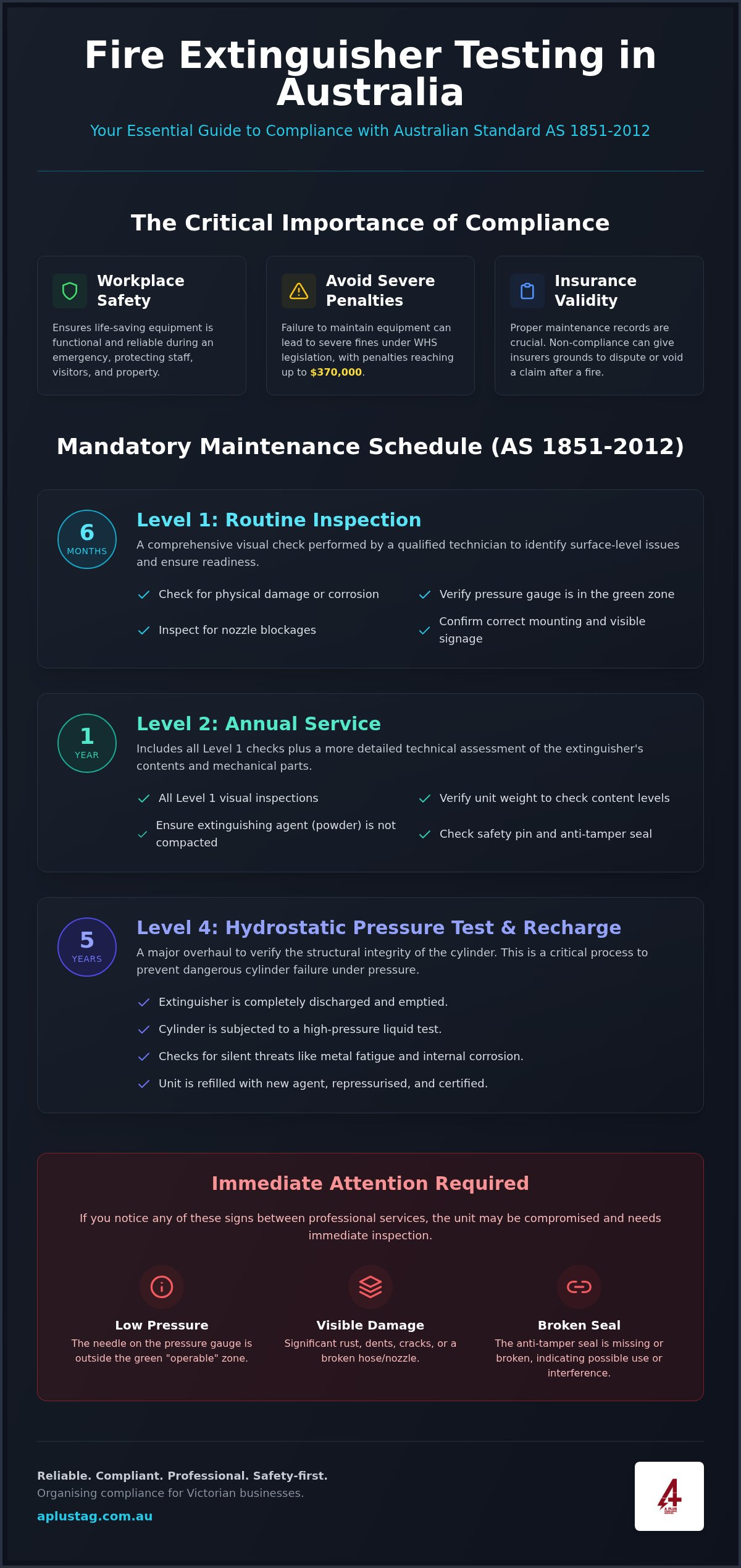
Ignoring these maintenance cycles can have devastating consequences for an organisation. If a fire occurs and your equipment is found to be non-compliant, insurers may dispute or void your claim entirely. Additionally, regulatory bodies impose heavy penalties for safety breaches. In Victoria, a body corporate can face fines up to $370,000 for failing to maintain a safe workplace. By sticking to a professional schedule, you move from a state of uncertainty to one of organised control, backed by clear documentation for audits and insurance purposes.
To better understand these mandatory testing cycles, watch this helpful video:
The 6-Monthly Routine Inspection (Level 1)
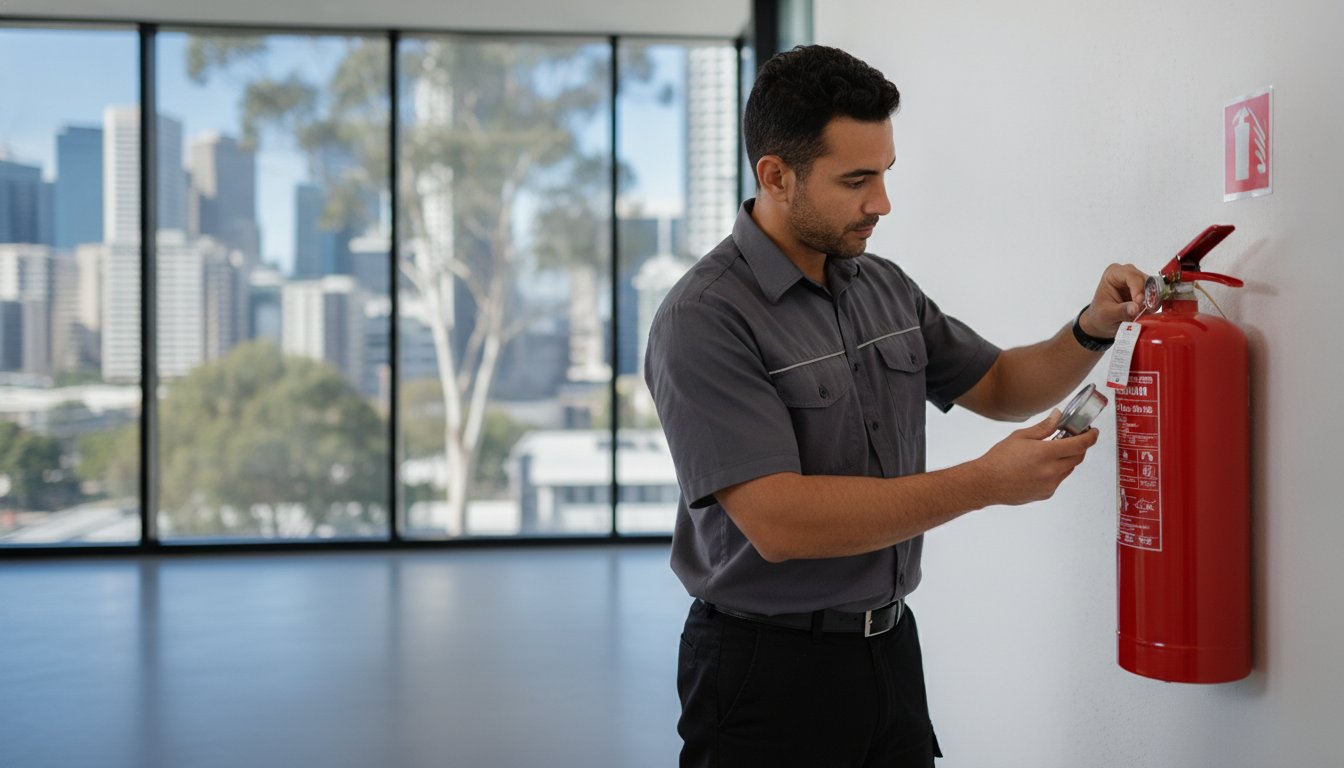
A Level 1 inspection is the first tier of the maintenance cycle and occurs every six months. This is a comprehensive visual check where a technician looks for physical damage, corrosion, or nozzle blockages. We verify that the pressure gauge is in the green zone, indicating the unit is pressurised correctly. It’s also essential to check that the extinguisher is mounted at the correct height and that signage is visible from a distance. These regular intervals ensure that small issues don’t become critical failures during a fire event.
Annual Maintenance Requirements (Level 2)
The annual service, known as Level 2 maintenance, involves a more technical assessment of the unit’s integrity. Technicians perform all the visual checks from the six-monthly inspection but also verify the unit’s weight to confirm the contents are within legal limits. For powder-based extinguishers, it’s vital to ensure the extinguishing agent hasn’t compacted or solidified over time. We also test the mechanical parts, ensuring the safety pin is easily removable and the anti-tamper seal is secure. This detailed approach is part of our broader compliance services, designed to provide long-term peace of mind for site managers.
The 5-Year Hydrostatic Pressure Test and Recharge
Every five years, portable extinguishers must undergo a comprehensive Level 4 service. This is a significant milestone in the maintenance lifecycle that involves a major overhaul of the equipment. When considering how often do fire extinguishers need to be tested in Australia, many site managers overlook this technical requirement, focusing only on the shorter visual inspections. This cycle requires the unit to be completely discharged and subjected to a hydrostatic pressure test. Hydrostatic testing is a liquid-based pressure test designed to verify the structural integrity of the cylinder.
This process is designed to ensure the cylinder can still safely hold high pressure without rupturing during use. Over five years, the internal and external conditions of the unit can change significantly. A professional service provider ensures that every unit on your site meets these rigorous safety benchmarks, maintaining a clear record of when each cylinder is due for its next overhaul.
Why the 5-Year Service is Critical for Safety
Metal fatigue and internal corrosion are silent threats that weaken a cylinder over time. Environmental factors, such as high humidity or exposure to salt air in coastal regions, can significantly accelerate this degradation. A weakened cylinder is a safety risk; if it fails while under high pressure, it can become an explosive hazard within your workplace. Ensuring Compliance with Australian Standard AS 1851-2012 through this 5-year check protects your staff from these avoidable mechanical failures. It transforms a potential liability into a verified safety asset.
What Happens During a Pressure Test?
During this service, the extinguisher is emptied of its contents and filled with water to test for leaks, expansion, or permanent deformation under high pressure. This methodical process confirms the cylinder can safely hold its charge for another five years. We also take this opportunity to replace critical internal components like valves and O-rings, which naturally perish or lose their elasticity over time. Once the test is passed, the unit is recharged with fresh extinguishing agent and re-pressurised to the required level. It’s a precise operation that restores the equipment to its optimal state, ready for immediate deployment if needed.
Managing these long-term cycles across multiple sites can be complex, especially when different units were installed at different times. If you are unsure when your equipment last underwent a Level 4 service, you can speak with our team to review your maintenance history and organise a compliant schedule.
Compliance with Australian Standard AS 1851-2012
The primary framework for fire safety in Australian workplaces is the Australian Standard AS 1851-2012. This document is widely regarded as the ‘gold standard’ for the routine service of fire protection systems and equipment. It provides the definitive answer to how often do fire extinguishers need to be tested in Australia by outlining precise maintenance schedules that must be followed to ensure equipment reliability. Adhering to this standard is not just about ticking a box; it involves a systematic approach to safety that includes specialised inspections of fire blankets and hose reels alongside your extinguishers. Testing these items together during a single visit creates a more efficient compliance cycle for your organisation.
Regular testing is a fundamental requirement for most commercial building insurance policies. Insurers often view a lack of documented maintenance as a significant risk, which could lead to complications or even the denial of a claim following a fire incident. By following the maintenance of fire equipment guidelines, you demonstrate a proactive commitment to risk reduction. This structured approach ensures that every piece of life-saving equipment is ready for immediate use, providing a safer environment for your staff and visitors alike.
Essential Record Keeping and Logbooks
Maintaining a detailed fire safety logbook is a mandatory part of the compliance process. Every test, whether it is a 6-monthly visual check or a 5-yearly hydrostatic test, must be recorded with the exact date, the type of service performed, and the technician’s specific details. These records serve as your primary evidence during a safety audit or an insurance review. For operations managers handling multi-site requirements, digital asset registers offer a superior alternative to traditional paper logs. These digital systems provide a reliable way to track due dates across various locations, ensuring that no piece of equipment falls behind its required service schedule.
Yellow Maintenance Tags and Stamping
The yellow maintenance tag attached to each extinguisher is the most visible sign of your commitment to safety. During a service visit, technicians use a specialised tool to punch the tag, indicating the exact month and year the maintenance was completed. This physical record allows anyone on-site to verify the status of the equipment at a glance. A missing tag or one that shows an expired date is an immediate red flag for safety inspectors and can lead to formal non-compliance notices. Keeping these tags up to date is a simple but vital part of maintaining an organised and compliant workplace.
Identifying When an Extinguisher Needs Immediate Attention
While the formal answer to how often do fire extinguishers need to be tested in Australia is dictated by the mandatory six-monthly and annual service cycles, safety shouldn’t be treated as a “set and forget” task. A lot can happen to a unit between professional visits. A unit might be knocked during cleaning, moved by unauthorised personnel, or subjected to accidental impact. If any defect is identified during your daily operations, you must arrange for immediate professional service rather than waiting for the next scheduled date. While your team can perform basic visual surveys, any formal testing or repairs must be conducted by a “competent person” with the specialised training required by the Standard. Never attempt to discharge an extinguisher just to “test” its functionality yourself. Even a brief squeeze of the handle can break the internal seal, causing a slow leak that leaves the unit depressurised when it’s actually needed.
Visual Checks Between Professional Services
Routine staff walkthroughs are an effective way to maintain an organised and safe environment without needing technical expertise. During these checks, your team should verify that every extinguisher is in its designated location and remains easily accessible with clear signage. A quick glance at the pressure gauge is essential; the needle must be firmly seated in the green operable zone. If it has drifted into the red “recharge” or “overcharged” sections, the unit requires immediate professional attention to remain compliant. Staff should also ensure the safety pin is securely in place and the plastic tamper seal remains unbroken. Look for visible signs of physical deterioration, such as rust on the cylinder, deep dents, or fluid leaking from the base or hose connections. These small observations help prevent non-compliance during your next official safety audit.
Environmental Factors Affecting Testing Frequency
Harsh conditions often necessitate a more frequent inspection cycle than the standard six-monthly requirement to ensure equipment reliability. Corrosive environments, such as chemical processing plants or facilities near coastal areas with high salt spray, can damage metal cylinders much faster than a standard office setting. High-vibration areas, including construction sites or manufacturing floors with heavy machinery, also pose a unique risk. Constant vibration can cause the dry chemical powder inside to compact, which might prevent it from flowing correctly during a fire. Equipment stored outdoors needs extra protection from UV damage and moisture ingress, which can perish rubber hoses and obscure vital instructions on the label. A proactive approach in these environments ensures your equipment remains functional and your organisation stays protected regardless of local conditions.
Organising a Professional Fire Equipment Maintenance Schedule
Effective fire safety management shouldn’t be a source of stress or uncertainty for business owners. While the question of how often do fire extinguishers need to be tested in Australia has a clear regulatory answer, the logistical challenge of tracking those dates across various sites remains. Partnering with a professional compliance expert ensures your organisation never misses a critical six-month or five-year deadline. This systematic approach moves the responsibility of scheduling away from your internal team and into the hands of specialists who prioritise long-term order and reliability.
A significant advantage of this partnership is the ability to conduct integrated safety testing. Rather than managing multiple contractors for different equipment, you can consolidate your fire hose reel testing, fire blanket inspections, and extinguisher maintenance into a single, efficient visit. A Plus Compliance Services uses automated reminders and detailed asset registers to track every piece of equipment on your site. This provides a transparent record of service history that is always ready for a safety audit or insurance review, ensuring your business stays organised and protected.
Why a Long-Term Compliance Partner Matters
Consistency in reporting is vital for tracking safety assets across several locations. Technicians who visit your site regularly develop a deep understanding of your specific layout and operational risks. They can identify recurring safety hazards more effectively than a one-off contractor who lacks site-specific context. This continuity significantly reduces your administrative burden, as electrical test and tag, RCD testing, and fire equipment maintenance are all managed through a unified reporting system. By maintaining a steady relationship with a dependable partner, you ensure that your safety documentation is thorough, accurate, and easily accessible when needed.
Streamlining Your Safety Obligations with A Plus
Our team provides clear and reliable support tailored to fire extinguisher testing requirements Victoria and broader national standards. We understand that your business needs to remain operational, so we work around your specific schedule to minimise workplace disruption. Our goal is to act as a supportive ally that keeps your facility organised and compliant without the need for constant internal oversight. We focus on a “safety-first” approach, ensuring that every piece of equipment is verified to the highest professional standards. Arranging a professional assessment is the most effective way to ensure your business remains fully protected and safe for everyone on-site.
Securing Your Workplace with Systematic Maintenance
Maintaining a safe workplace requires more than just installing safety equipment; it demands a commitment to regular, professional oversight. Understanding how often do fire extinguishers need to be tested in Australia is the first step toward building a more organised and secure environment for your staff. By adhering to the 6-monthly inspections and the critical 5-yearly hydrostatic pressure tests mandated by AS 1851-2012, you eliminate the risk of equipment failure during an emergency. We’ve discussed how digital asset registers and yellow maintenance tags provide the transparent documentation needed to satisfy both safety auditors and insurance providers.
A Plus Compliance Services acts as a reassuring partner, offering the specialised expertise required to manage these complex recurring cycles. We provide comprehensive digital asset registers that simplify your record-keeping and ensure no deadline is ever missed. Compliance made simple. This proactive approach reduces your administrative burden while helping Victorian businesses stay organised and audit-ready. You can rely on our punctual and methodical service to keep your organisation protected and fully compliant with national regulations.
Establishing a reliable maintenance schedule today provides lasting peace of mind for the future. We’re here to help you move from uncertainty toward a state of total organised control.
Frequently Asked Questions
Is it a legal requirement to have fire extinguishers tested every 6 months?
Yes, it is a legal requirement for Australian workplaces to have portable fire extinguishers inspected every six months in accordance with AS 1851-2012. This standard ensures that equipment remains in a functional state and is easily accessible during an emergency. Failure to maintain this schedule can result in significant regulatory penalties and may void your business insurance. Adhering to these intervals is a core part of maintaining a safe and compliant work environment.
Can I test my own fire extinguishers in a commercial workplace?
You can only conduct formal inspections if you meet the definition of a competent person under Australian Standards. This typically requires specific training and qualifications, such as the CPPFES2020 course. While staff can perform basic monthly visual checks to spot obvious damage, the mandatory six-monthly and annual services must be documented by a qualified technician to satisfy safety audits and legal obligations. Professional testing ensures every technical detail is verified correctly.
What happens if a fire extinguisher fails its pressure test?
If a cylinder fails its hydrostatic pressure test, it is deemed unsafe and must be decommissioned immediately. The technician will condemn the unit to prevent it from being used, as a weakened cylinder under high pressure poses a significant explosive risk. In most cases, it’s more cost-effective for a business to replace the failed unit with a new, compliant model rather than attempting expensive repairs on a compromised shell.
Do fire blankets need to be tested as often as fire extinguishers?
Yes, fire blankets require the same six-monthly inspection frequency as portable extinguishers under the AS 1851-2012 standard. During these checks, technicians ensure the blanket is correctly mounted, the container is undamaged, and the pull-tabs are visible and accessible. Regular testing is essential because blankets can become contaminated with grease or suffer from fabric degradation over time, which compromises their ability to smother a fire safely.
How much does fire extinguisher testing typically cost for a small business?
The cost of fire safety maintenance depends on several factors, including the number of units on-site, the types of extinguishers used, and the complexity of your facility. Because every workplace has different risk profiles and equipment needs, we don’t provide generic pricing. We recommend requesting a site-specific assessment to get an accurate quote that reflects your exact compliance requirements. This ensures you only pay for the specialised service your business actually needs.
What is the difference between a 6-monthly and an annual fire safety inspection?
A six-monthly inspection is a Level 1 visual check focusing on accessibility, pressure levels, and external damage. The annual inspection is a more intensive Level 2 service that includes checking the weight of the unit and ensuring the extinguishing agent hasn’t solidified. Both cycles are necessary to determine how often do fire extinguishers need to be tested in Australia to remain fully compliant with national safety standards and insurance policies.
Do I need to replace my fire extinguishers every 5 years or just recharge them?
You don’t necessarily need to replace the unit every five years, provided it passes the mandatory Level 4 hydrostatic pressure test. If the cylinder’s structural integrity is confirmed, it is recharged with fresh chemical agent and returned to service. However, if the technician identifies deep corrosion, mechanical damage, or if the unit fails the pressure test, a full replacement is required to maintain a safe workplace and meet your legal obligations.
How do I read the maintenance tag on my fire extinguisher?
You read the yellow maintenance tag by looking for the punched holes that indicate the date of the last professional service. The tag features a grid of months and years; the technician will punch the specific month and year they completed the inspection. If the most recent punch is more than six months old, your equipment is overdue for testing. Keeping these tags up to date is a vital part of your site’s safety documentation.
